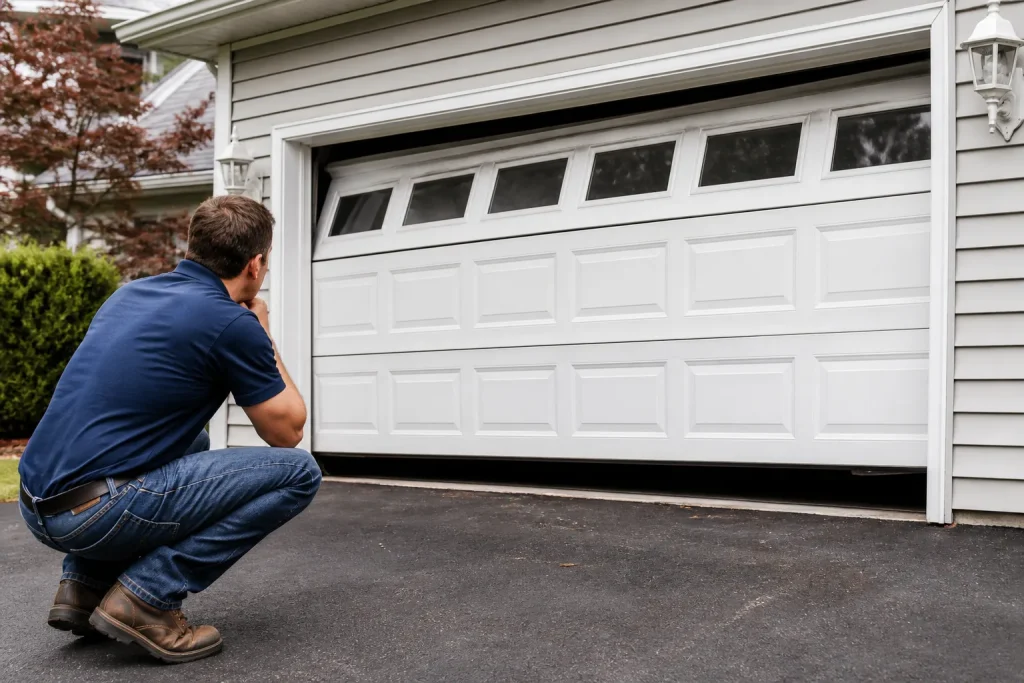
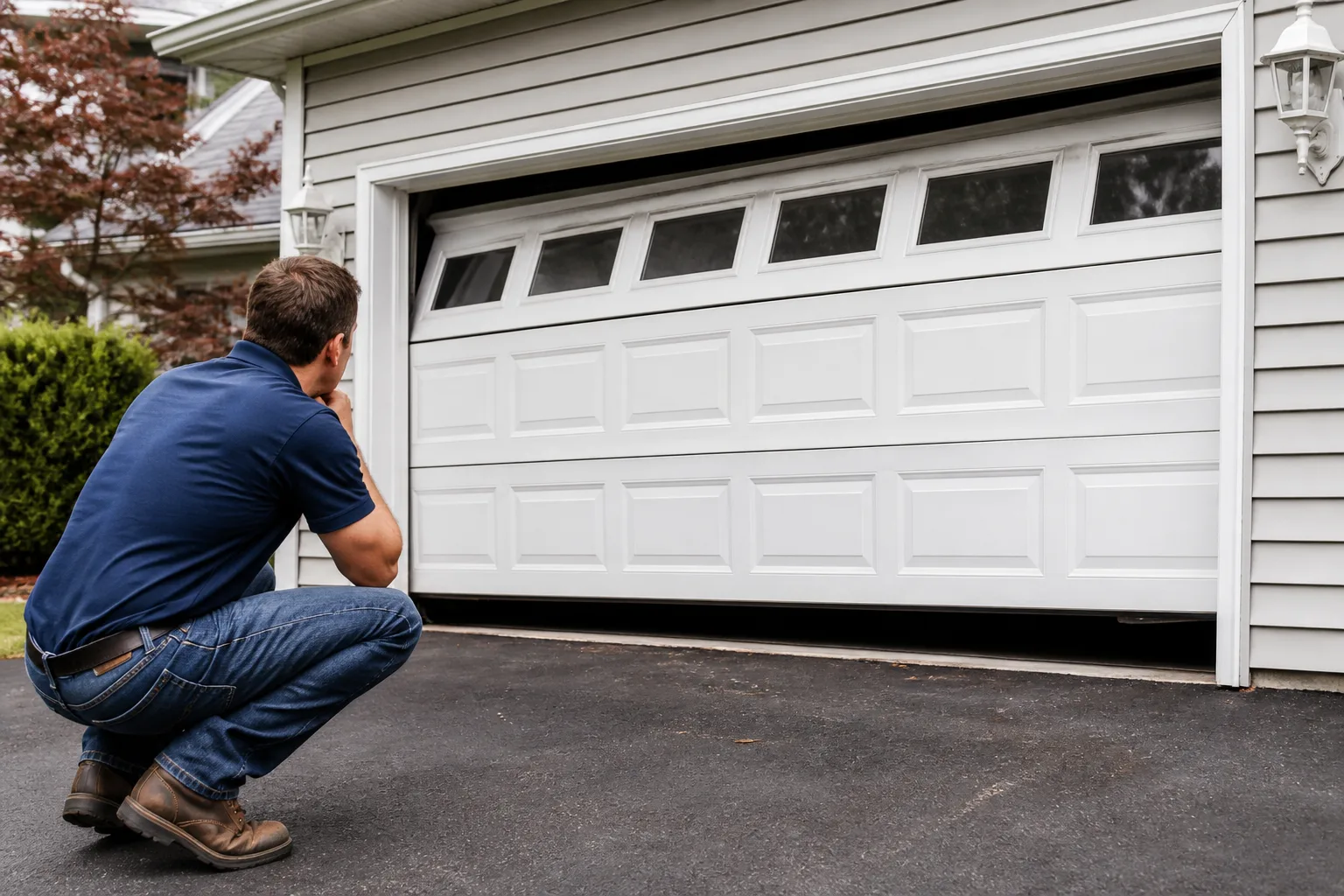
Top Signs You Need Garage Door Service – Don’t Ignore These
A garage door that takes two seconds longer to open than it did six months ago isn’t aging gracefully. It’s telling you that one component is already compensating for another that’s failing. The warning signs almost always arrive in order, and the homeowner who reads them early spends a fraction of what the homeowner who waits spends later. Here are the signals worth acting on, what each one actually means, and how to tell the cosmetic ones from the ones that put your door and your family at risk.
If you’d rather not sort through it yourself, call (855) 658-4190 and we’ll take a look. Estimates are free, and the price is agreed before any work starts.
Key Takeaways
- Symptoms follow a failure arc: noise and slowness come first, then balance problems, then a door that won’t move at all.
- Noise usually means a worn roller or dry hinge, not a spring on its own. Lubrication quiets it; it doesn’t fix the wear.
- Two safe tests, the balance test and the reversal test, take under three minutes and tell you a lot about spring and opener health.
- New England winters turn October symptoms into December breakdowns. Cold stiffens grease and shrinks metal.
- A $150 roller-and-cable fix ignored for 90 days commonly turns into several hundred dollars of opener and track damage.
What are the first signs a garage door needs service?
The earliest signs are changes you notice but talk yourself out of: a louder rumble, a slight pause mid-travel, a door that doesn’t sit flush when it closes, or a remote that needs a second press. These are the cheap-to-fix stage. Almost every expensive garage door problem in Chicopee we’re called out for started as one of these small, dismissed symptoms weeks or months earlier.
Think of it as an arc rather than a checklist. It usually runs in this order:
- Noise and vibration. Grinding, squealing or a hollow rattle. Usually worn rollers, dry hinges or a loosening chain.
- Slower or uneven travel. The door hesitates, stalls partway, or one side rises before the other. Torsion springs losing tension or a cable starting to fray.
- Balance problems. The door drifts down on its own or slams the last few inches. Spring tension is no longer matched to the door’s weight.
- Opener strain. The motor works harder to lift a door that’s gone heavy, and the opener’s gears and capacitor start to wear.
- Full failure. A snapped spring, a cable off its drum, or a door that won’t open past a foot. This is the stage that strands your car.
The point of the sequence is that stage one is a small repair and stage four can mean replacing an opener that was fine. We’ve seen this pattern play out across every major brand, from older Genie units to newer LiftMaster systems, because the arc is mechanical, not brand-specific.
Why is my garage door getting louder? Mapping noise to its real cause
A noisy door is not automatically a lubrication problem. Grease quiets a squeak, but if the noise is grinding or a metallic scrape, you’re hearing metal wearing against metal, and lubrication only masks it temporarily. Here’s how to map the sound to the cause:
- Squealing or high-pitched whine: typically a dry hinge or a worn nylon roller. New rollers and a proper lube are a small job.
- Rumbling or grinding: often a bearing plate or a roller with a flattened wheel that’s dragging in the track instead of rolling.
- A hollow rattle or clunk: usually a loose chain or belt in the opener, or loose track brackets.
- A sharp snap followed by a bang: that’s a torsion spring letting go. Stop using the door and call us. Springs store enormous tension, and this isn’t a DIY fix.
Winter amplifies all of these. Cold stiffens the grease in the rollers and makes the metal contract, so a door that rattled lightly in October will sound like a freight train by January. If you’re hearing that progression in Chicopee, it’s the door asking for garage door repair before the cold locks it in place.
Two safe tests you can run in under three minutes
You can gauge the health of your springs and opener with two simple checks. Neither requires tools, and neither puts your hands anywhere near the springs or cables.
The balance test. Close the door, then pull the emergency release handle to disconnect the opener. Lift the door about halfway by hand and let go. A healthy door holds roughly where you left it, because the springs carry its weight. If it drops, the springs have weakened and the opener is doing work it wasn’t built to do. Reconnect the opener before you use it again.
The reversal test. Close the door and wave a broom handle or a box in the photo-eye path as it comes down. A properly set opener reverses immediately. If the door doesn’t reverse, or the safety eyes are misaligned and the opener won’t close at all, that’s safety-critical and worth fixing right away.
If the door drops fast during the balance test, keep your hands clear and don’t force it. We can come out and check the springs rather than have you guess whether one is about to break. Spring work is a trained professional’s job, plain and simple.
Why New England winters speed up garage door failure
Chicopee’s cold does something specific to a garage door: it shrinks and stiffens every moving part at once. Metal cables contract, grease thickens, and the torsion springs that carry the door’s weight become slightly less springy. A door that was marginal in the fall is often a door that fails on the first genuinely cold morning. That’s the classic December breakdown: a car stranded, a door that won’t open, and a thawing day wasted waiting for a fix.
The signals to watch in October are early warnings, not cosmetic noise. If you notice any of these before the first hard freeze, it’s worth a look:
- The door moves a touch slower or grunts more than it did last spring.
- One side lags the other as the door rises.
- The bottom seal no longer meets the floor cleanly, letting cold air in.
- The opener’s light flickers or the motor strains on the first lift of the day.
These are also the symptoms that come from a door that’s simply out of balance after a summer of heavy use. If you notice the door acting sluggish or the opener straining, we can check the springs and hardware before winter sets the timetable for you. We’ll schedule a visit, not a rushed one.
Which symptoms are cosmetic and which are safety-critical?
Not every problem needs the same urgency, and knowing the difference keeps you from panicking over a squeak or from ignoring something dangerous. The cosmetically annoying symptoms can wait a few weeks. The safety-critical ones shouldn’t.
Cosmetic or low-urgency:
- A squeaky hinge, a rattling chain, or a peeling weather seal.
- Faded or scuffed panels where the door still moves and seals correctly.
- A stubborn remote that needs a new battery or reprogramming.
Safety-critical:
- A door that drops hard or won’t hold its position during the balance test.
- A frayed or kinked cable, or a spring that has visibly snapped.
- A door that won’t reverse when something’s in its path.
- A door stuck off its tracks, hanging crooked, or open just a foot.
When a door is off its tracks or you see a broken spring, leave it alone and call us. That’s the moment for garage door opener repair only after we’ve sorted the door itself, and it’s a good time for our dedicated garage door spring repair team to take over. If your door fails at night or before work, we offer emergency service for exactly these situations, so call (855) 658-4190 and we’ll get you booked. The price is quoted and agreed before anything is touched.
How a small ignored symptom becomes a big repair
A worn roller or a frayed cable doesn’t stay a $150 fix forever. It spreads. When one roller seizes, the door stops rolling evenly and starts dragging through the track. The uneven load transfers to the springs and the opener, which now has to work harder than it was designed to. Over about 90 days, what began as a cheap roller replacement can grow into track adjustment, a spring or opener repair, and several hundred dollars of labor on top.
The cable is the sneaky one. A single fraying strand is easy to miss, but once the cable starts to unravel on the drum it can jump its groove, and suddenly the door is hanging crooked and won’t move at all. We see this most on older Wayne Dalton and Clopay doors where the hardware has quietly aged past its intended life. A fifteen-minute inspection catches a cable like that while it’s still a cable repair rather than a door that’s dropped out of true.
The lesson is the same across all eight major brands we work on: repair the worn part early and the rest of the system stays healthy. Wait, and the failure arc collects its bill at the worst possible time.
When should you call a pro instead of a handyman?
Call a garage door specialist, not a general handyman, when the symptom involves the springs, the cables, the tracks, or the safe balance of a door that’s gone heavy. Those are the mechanically hazardous parts of the system. Springs and cables carry the full weight of the door under high tension, and a mistaken adjustment can lead to serious injury. Keep your hands clear and let a trained professional handle them.
We work on the brand already in your garage. Whether it’s a Genie or a LiftMaster opener or an Amarr or Clopay door, our technicians are trained to diagnose and repair the system that’s already there rather than swap in unfamiliar parts. For a squeak or a battery, a handyman is fine. For anything that lifts, balances or secures the door, it’s a specialist’s job – one call, full fix, rather than a chain of referrals as the problem grows.
If you’ve watched a small symptom grow and you’re in Chicopee, stop guessing and get it looked at. Our technicians have up to 15 years of experience, and the written estimate sets the final price.
The Bottom Line
Warning signs arrive in order, and the earliest ones cost the least to fix. A louder door, a slower lift, or a wobble during the balance test are the door telling you that one part is already compensating for another. If the symptom is cosmetic, you have time. If it’s safety-critical, a bent track, a snapped spring, or a door that won’t reverse, call right away and keep everyone clear. Left alone, a cheap roller or cable repair becomes a much bigger bill within a few months, and New England cold has a habit of turning October’s minor noise into December’s stranded car.
If you’re in Chicopee and need help, Chicopee Garage Door Repair Pros offers free estimates. Call (855) 658-4190 and we’ll set a time to look at it.
Frequently Asked Questions
The clearest sign is a loud bang followed by a door that won’t open or that suddenly feels very heavy. Before that, a door that drifts down on its own or fails the balance test usually means a spring has lost tension. Stop using the door and call a pro.
It depends on the sound. Squealing or high-pitched whine is usually a dry hinge or worn roller and can be a simple tune-up. Grinding or a metallic scrape usually means parts are wearing, which is a repair. A sharp snap followed by a bang is a broken spring.
Yes. Cold stiffens the grease and shrinks the metal, so marginal parts fail in winter that were fine in the fall. Symptoms you notice in October are often warnings of a breakdown on the first genuinely cold morning in Chicopee.
Call for anything involving the springs, cables, tracks or the door’s balance. Those carry the door’s full weight under high tension and can injure you. A squeak or a remote battery is fine to handle yourself.
Written by the team at Chicopee Garage Door Repair Pros.
Need Garage Door Help?
Call Chicopee Garage Door Repair Pros - the local pro we connect you with is licensed and insured, here with fast after-hours help in Chicopee.
(855) 658-4190