Last updated November 23, 2026
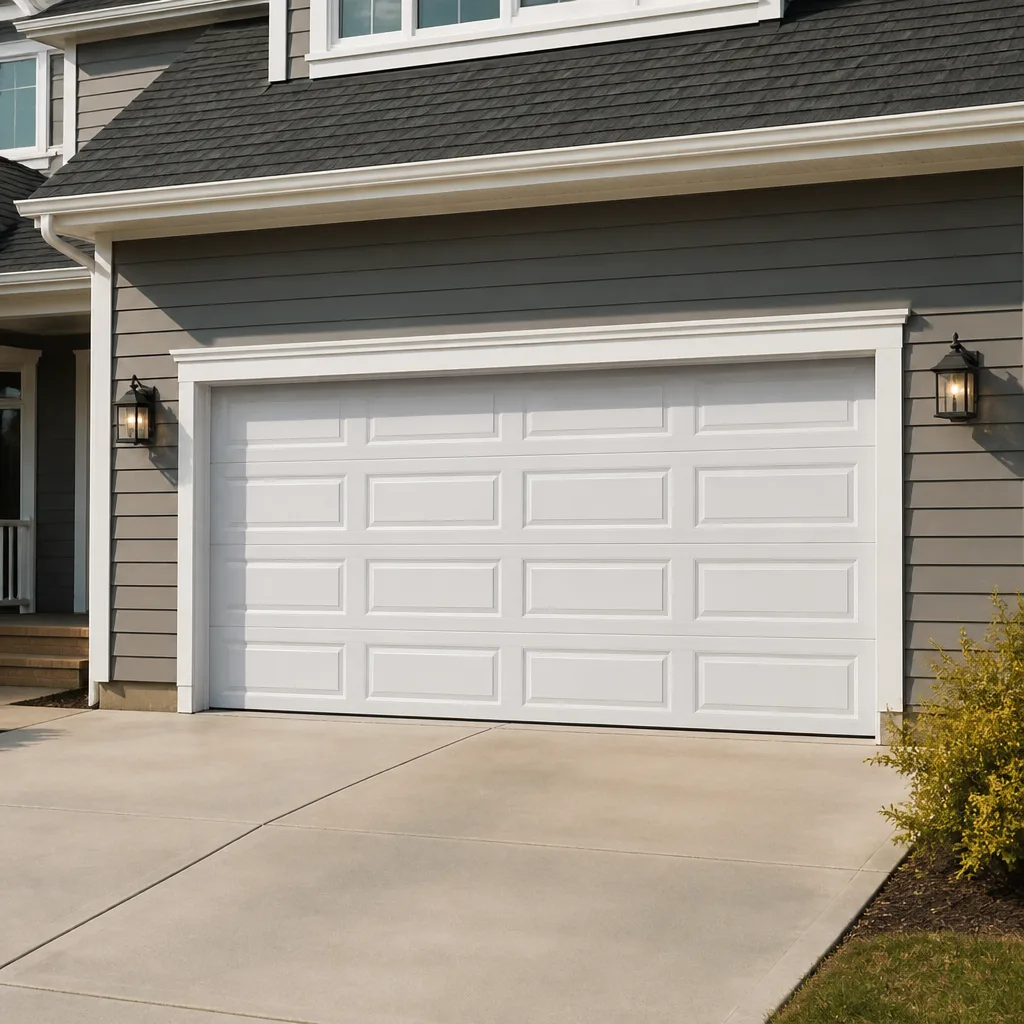 Raised-panel steel
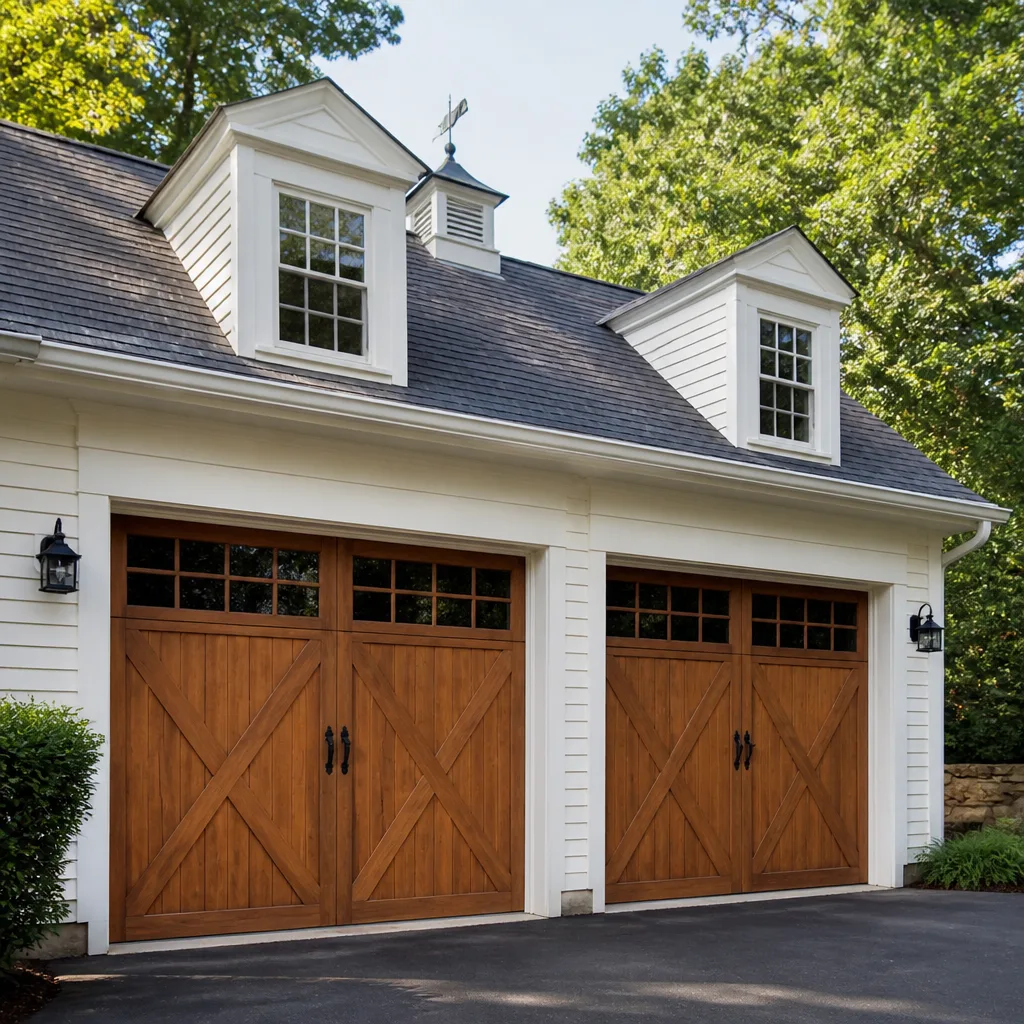 Carriage house
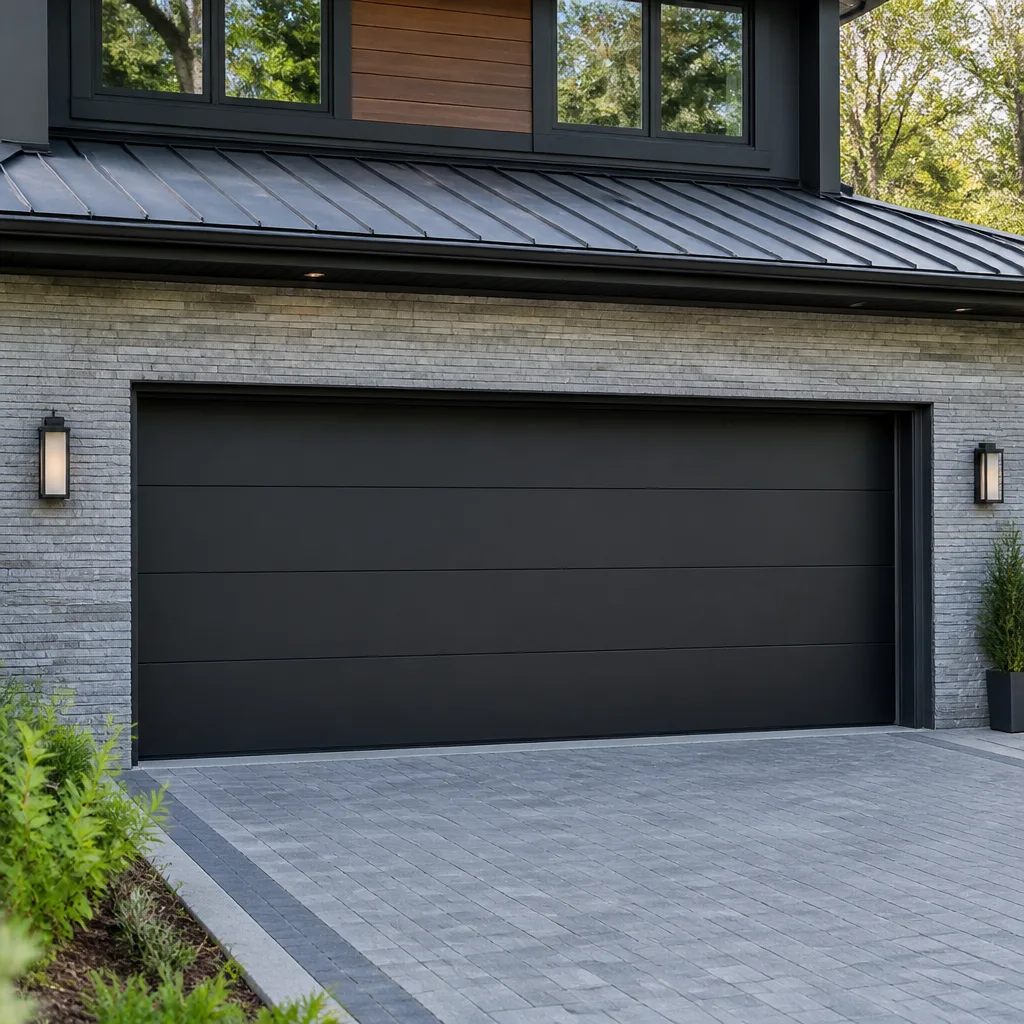 Modern flush
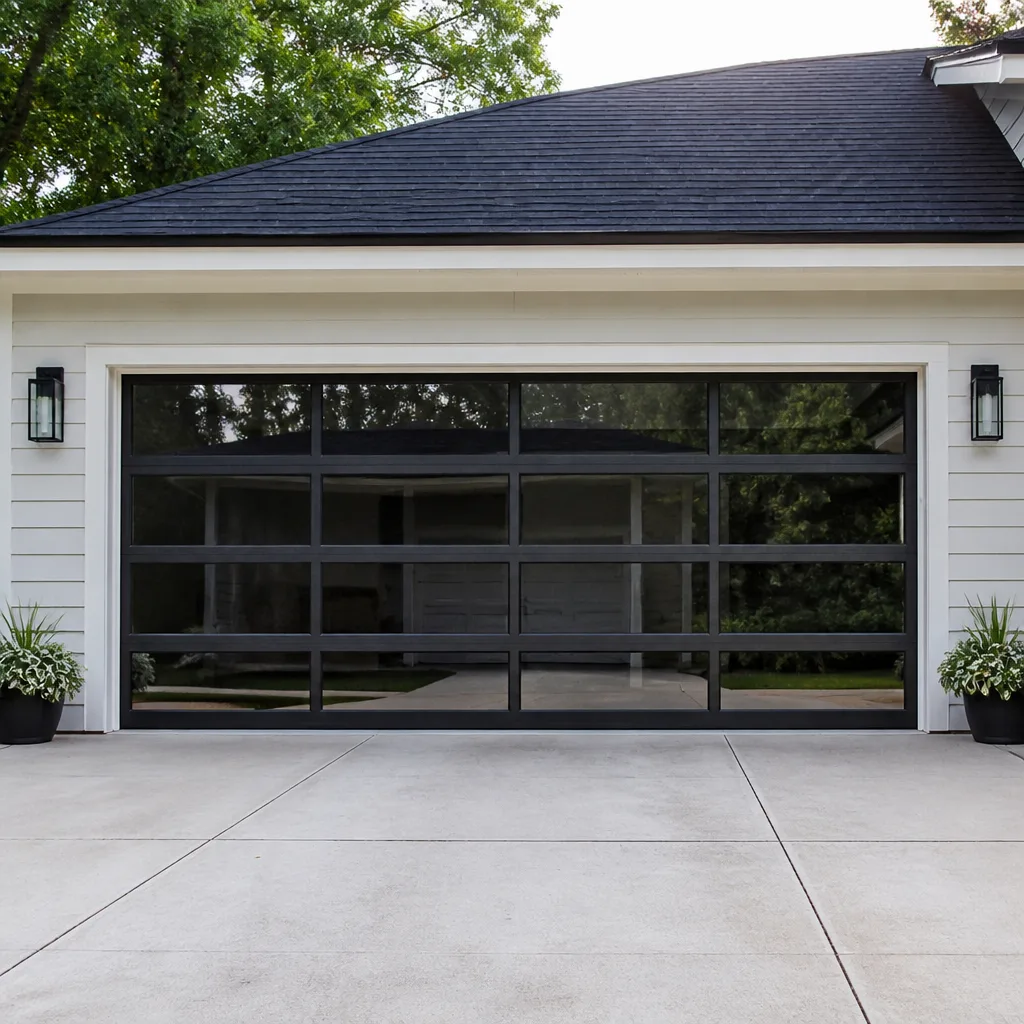 Full-view glass
 LiftMaster openers
 Chamberlain openers
Full 25-point door and opener safety check with every visit - springs, cables, rollers, tracks, and your LiftMaster or Chamberlain opener included
You get a price before we start. It does not change when the pro arrives.
Get your free estimateGarage Door Warning Signs: A Chicopee Homeowner’s Reference Guide
Most warning-sign guides describe failures that are already failures. A door that won’t open isn’t a warning sign; it’s the event itself. The signals that actually matter show up earlier, and they’re quieter. A garage door that hesitates for half a second before it moves isn’t “just getting old” – it’s a torsion spring losing tension, and that half-second pause can be a 30-day notice before the spring gives out completely, usually at 7 a.m. when you’re already late for work. This guide is about that window. We’ll walk through what your door is telling you through sound, movement, sight, and opener behavior, then show you how to triage it: what can wait for a scheduled appointment in Chicopee, and what means stop using the door today.
Quick Answer
A hesitating, jerky, or suddenly noisy garage door is usually telling you a spring, cable, roller, or opener is wearing out – and those early symptoms give you a repair window of days to weeks before a full failure. A loud bang, a door hanging crooked, or a snapped cable means stop using the door now and call a technician. Learning to read the early signs on a Chicopee door is what keeps a $200 repair from turning into an emergency.
Styles & brands we work with
- Raised-panel steel
- Carriage house
- Modern flush
- Full-view glass
- LiftMaster openers
- Chamberlain openers
Table of Contents
- Why Early Warning Signs Matter More Than Breakdowns
- Sound-Based Diagnostics: What You’re Hearing and What It Means
- Movement-Based Diagnostics: Uneven, Slow, and Jerky Operation
- Visual Inspection Cues You Can Read From a Distance
- Opener Behavior Changes, Decoded by Cause
- The Triage Guide: Schedule a Repair vs. Stop Using the Door Today
- How Chicopee Seasons Affect What Your Door Tells You
- Frequently Asked Questions
Why Early Warning Signs Matter More Than Breakdowns
The garage door is the largest moving object on a house, and it carries tension most homeowners never think about. A torsion spring holds hundreds of pounds of force even when the door is closed. When that spring starts to lose tension slowly, the door doesn’t fail immediately; it compensates. The opener labors a little harder. The springs flex a little differently. The door gets a fraction slower. All of that reads as normal to a homeowner until the morning the spring snaps and the door stays put.
That’s the point of learning the early signals. A door caught at the hesitation stage is a scheduled spring replacement. A door caught at the snap stage is an emergency call, sometimes with a car trapped inside and someone late for work. The difference between those two outcomes is usually just whether someone noticed the subtle cues in the weeks before.
In Chicopee, this matters for a few reasons. The housing stock is old – plenty of homes around Chicopee Falls, Willimansett, and the Fairview section have doors and openers that have been in place for years, and older torsion setups don’t get more forgiving with age. Then there’s our winter: freeze-thaw cycles work on garage door hardware more than most people realize, tightening cables and stiffening rollers, which is why early spring is when a lot of Chicopee door problems surface. If you’ve already got a visible problem and want the repair sorted, our garage door repair service covers diagnosis through fix. But the goal of this guide is to catch things before they get that far.
The next sections break the early signals into four categories: sound, movement, visuals, and opener behavior. Some overlap. That’s fine. When two or three signals point at the same component, that’s your answer.
Sound-Based Diagnostics: What You’re Hearing and What It Means
Your ear is the fastest diagnostic tool you have, and it’s free. A healthy garage door makes one sound: a steady, low hum from the opener with the door moving smoothly on its tracks. Anything else is a signal, and different sounds point at different root causes. Here’s how to decode the four you’re most likely to hear.
Grinding
Grinding is metal-on-metal, and it’s almost always a roller, hinge, or bearing issue. As rollers wear, their ball bearings seize, and the roller starts dragging across the track instead of rolling through it. The sound is a rough, continuous grind that gets louder as the door travels. Catching it early means replacing a few rollers; letting it run for months means scoring the track itself, which turns a small repair into a bigger one. Listen for grinding at the sides of the door, near the tracks.
Popping
A single sharp pop at the start of a cycle can be a cable slipping on its drum, a torsion spring winding unevenly, or a hinge shifting under load. One intermittent pop might be loose hardware. A pop that repeats in the same spot every cycle is worth getting looked at, because a cable that jumps its drum can release suddenly. Popping is one of the earlier spring and cable signals, and it’s the one people write off longest.
Squealing
Squealing is usually cosmetic at first – dry rollers, dry hinges, or a torsion tube that needs lubrication. But when squealing shows up combined with the door running slower than normal, it’s more likely a bearing starting to wear. If you’re hearing squealing only in one season, it’s probably the cold stiffening up rollers and hinges, which is very common in Chicopee by January. Lubrication often quiets it. Squealing that survives lubrication is a sign to book a visit.
Rattling
Rattling means something is loose: hinges, track brackets, the bolts that hold the door panels together. It’s the least urgent of the four sounds, but left alone, loose hardware leads to misaligned tracks and worn hinges. When you hear rattling, check whether it’s coming from the door panels or the track. Panels mean loose bolts; track means a shift in alignment.
- Grinding – worn roller bearings or scored track; catch early or the track gets damaged
- Popping – cable slipping, spring winding unevenly, or shifting hinge; can’t be ignored
- Squealing – dry components or a wearing bearing; seasonal squeal is usually cold-related
- Rattling – loose bolts, brackets, or hinges; lowest urgency but catches up eventually
Movement-Based Diagnostics: Uneven, Slow, and Jerky Operation
How the door moves tells you as much as what it sounds like. This is where the subtle early signals live, and where the half-second hesitation at the top of the cycle fits. Most homeowners blame the opener. In our experience, the opener is usually the messenger, not the problem.
Uneven lifting
If the door lifts slightly crooked – one side rising faster than the other – the cause is rarely the opener. It’s usually a torsion spring that’s lost tension, a cable that’s stretched, or a cable that has come off its drum. Uneven lifting puts the door under torsional stress, which accelerates wear on the panels and hinges. Watch for the door sagging at one corner as it rises. Uneven lifting is one of the clearest early spring and cable signals, and it’s worth a scheduled look before it becomes the sync failure that strands the door open.
Slow descent
A door that used to close at a steady pace and now creeps down has usually developed friction. That might mean worn rollers, a bent track section, or a torsion spring that’s over-tensioned. Slow descent is also a sign of the opener working harder than it should. The opener is designed to move the door, not fight it, and when it’s fighting it, the motor gets hot and the internal gears wear faster. So slow descent is both a symptom and a maker of future problems.
Jerky operation and hesitation
Jerky travel – the door starting and stopping, or that slight stall at the very beginning – is the classic early torsion spring signal. A torsion spring provides a counterbalance to the door’s weight. As it loses tension, it can’t hold the load at the start of the cycle, so the opener has to do more work. That stall becomes a lurch, then a struggle, then a snap. If your Chicopee door hesitates at the top of every cycle, don’t wait for the bang. It’s worth a visit.
If you’re seeing jerky operation alongside opener weirdness – lights flickering, the motor running longer than it should – the opener may also need attention. Our garage door opener repair covers both, and it’s the same visit.
Visual Inspection Cues You Can Read From a Distance
Some warning signs you can’t hear. You have to look. The rule here is simple: inspect from standing distance, never touch. Springs, cables, and the torsion assembly are under enormous tension even when the door is at rest, and a loaded spring doesn’t need much encouragement to release. We’ll say it plainly below. What follows is what to look for from your side of the garage, not what to go fix yourself.
Springs
Torsion springs sit on the horizontal shaft above the door; extension springs run along the tracks on either side. A healthy torsion spring is an even, consistent coil. When a spring is on its way out, you’ll often see a visible gap in the coil, a stretch where one section looks wider than the rest, or a spring that has visibly rusted. Rust matters more in Chicopee than most places because of our cold, wet winters – moisture collects on the coil, and rusting is one of the paths to fatigue failure. Look at the springs each season and note any gap or change in shape.
Cables
Cables should run straight from the drums at the top of the door down to the bottom brackets. From a distance, look for fraying, a cable that’s come off its drum, or one that looks slack compared to the other side. A cable that’s off its drum is in the “stop using the door” category. A cable with visible fraying is a scheduled repair, but a short-fuse one – fraying means strands are breaking.
Rollers
With the door closed or open, look at the rollers along the track from the side. Worn rollers look flat or chipped; healthy rollers are round and sit snug against the track. You’ll usually see the worn ones clustered where the door sees the most travel. Rollers are one of the cheapest parts on the door, and catching them early prevents track damage.
The safety line
We’re going to be direct about this. Springs and cables are the two components you do not inspect by hand, and you do not touch, adjust, or try to move with a tool. The tension in a loaded torsion spring is enough to cause serious injury on release, and a snapped cable can whip. If a visual check shows a broken spring, a slack cable, or a cable off its drum, that’s a call, not a project.
- Springs – look for gaps, uneven coil, or rust; never touch a loaded spring
- Cables – look for fraying, slack, or a cable off its drum; fraying is short-fuse, off-drum is stop-use
- Rollers – look for flat, chipped, or loose rollers; cheap parts, easy early catch
- Track – look for bends, dents, or sections out of alignment; usually a symptom, not the root cause
Opener Behavior Changes, Decoded by Cause
Opener problems are the most misdiagnosed warnings in the trade. A door that reverses, runs long, or needs two tries usually has a cause outside the opener itself – rails, sensors, springs, or rollers. But sometimes the opener really is the problem. Here’s how to tell the difference by symptom.
The door reverses unexpectedly
The most common cause is a misaligned photo-eye, the pair of sensors low on the track near the floor. A bumped sensor, a cobweb, or sunlight at a low angle can all trigger it. On older openers (Craftsman and legacy Genie units in particular) the safety-reverse can also trip on its own as the mechanism ages. If the door reverses once and doesn’t again, watch it. If it reverses consistently, the sensor alignment is the first check, and the opener’s safety mechanism is the second.
The opener runs longer than it used to
When a door used to complete a cycle in a few seconds and now takes longer, the opener is doing more work than it should. The cause is usually friction from worn rollers, a stiff torsion spring, or a bound track. If you’ve lubricated and inspected the basics and the opener is still running long, the motor’s wearing internal gears or a drive belt is losing tension. Chamberlain and LiftMaster belt-drive units are particularly prone to a stretched belt showing up this way.
The opener fails on first attempt
An opener that needs to be pressed twice, or that starts, stops, and needs a second shot, is usually a failing limit switch, a wearing capacitor, or a sensor issue. On Wayne Dalton and Amarr door-and-opener combinations, the opener is often at its limit for the door’s weight as the spring ages, so a door that used to open on one try needs a second when the spring has relaxed. That’s a spring signal masquerading as an opener signal.
Lights flickering or the remote losing range
A flickering opener light alongside a weakened remote is often a failing capacitor or a logic board starting to go. Replace the battery first – it’s the cheapest diagnosis you’ll ever make. If a fresh battery doesn’t fix the range, the opener’s receiver is the culprit, and modern replacements with Wi-Fi configuration are worth evaluating. If you’re keeping a legacy unit alive intentionally, we work on Raynor and LiftMaster openers regularly, and we’re comfortable telling you when a repair still makes sense versus when a replacement does.
The Triage Guide: Schedule a Repair vs. Stop Using the Door Today
Here’s the practical part. Some signs give you days or weeks. Others mean you should park outside, unplug the opener if it’s safe to do so from a standing position, and call now. The table below sorts the warning signs by urgency so you’re not guessing.
Stop using the door today
- A snapped torsion spring – a loud bang followed by the door not opening is a snapped spring. Do not keep pressing the opener; it will strain the motor and can damage the door.
- A cable off its drum or visibly snapped – if the door is hanging crooked with a cable slack or dangling, stop. The door can drop.
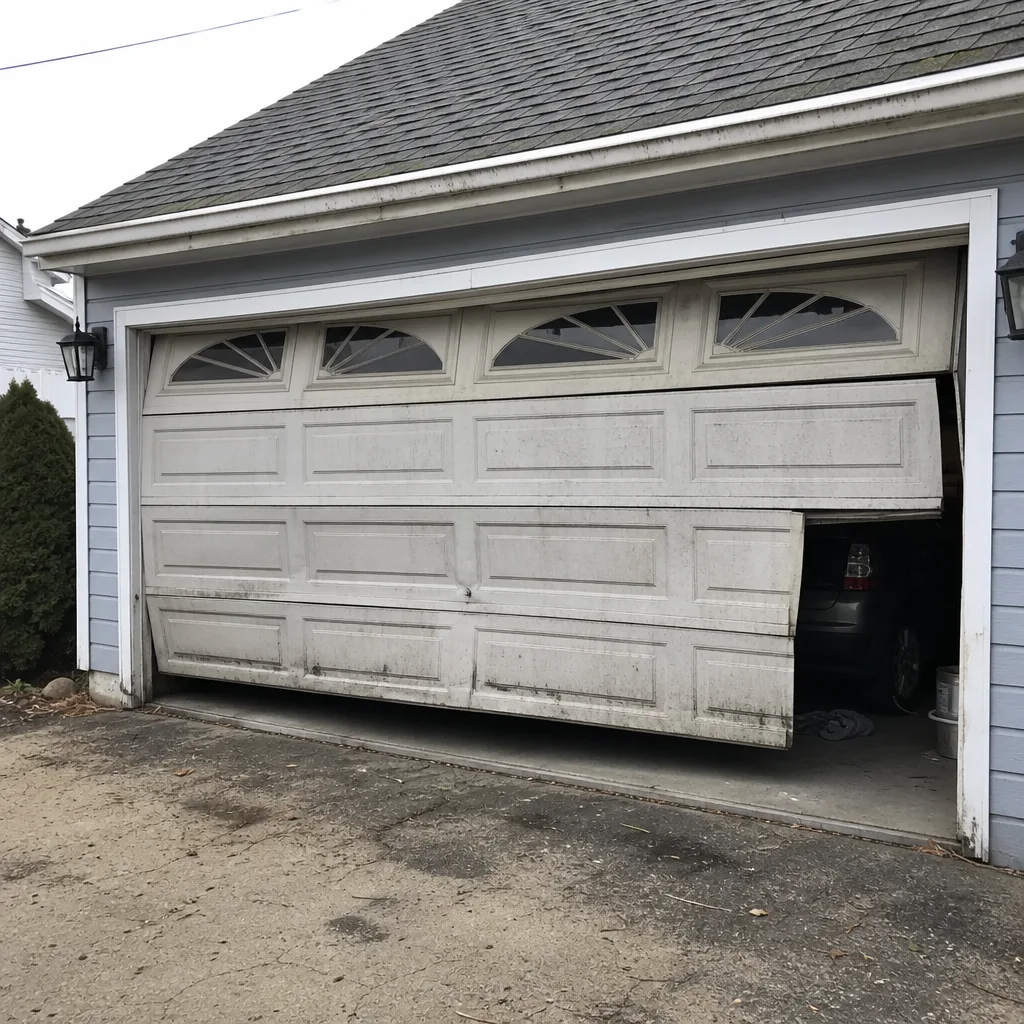
- A door hanging unevenly or off its tracks – if one side is stuck or the door looks like it’s coming out of the track, stop using it.
- The opener making a loud metal-on-metal noise with the door stuck – could be a stripped gear or a bound rail; keep using it and you’ll burn out the motor.
- You can see a gap in the torsion spring’s coil – that spring is compromised; keep the door down and call.
Schedule a repair soon
- Persistent grinding from worn rollers (usually days to weeks)
- Repeated popping in the same spot each cycle
- Uneven lifting – slower but still functioning
- Jerky motion with hesitation at the start of the cycle
- Opener running longer than normal with no other symptom
- Door reversing on first attempts, sensor-related
Monitor and note
- Intermittent squealing that comes and goes with the cold (very common in Chicopee in January)
- Occasional rattling that doesn’t worsen
- A slight slowdown in descent without any other symptom
If you’re not sure which category you’re in, err on the side of not using the door. A scheduled repair is always less expensive than a door-down emergency. If the door has already failed and you need it sorted fast, our garage door spring repair is the highest-priority call we take, because springs are the most common reason a door drops.
How Chicopee Seasons Affect What Your Door Tells You
Garage door warning signs in Chicopee are partly seasonal, and it’s worth knowing what’s normal versus what’s a real signal. Our climate does specific things to a door’s moving parts, and reading those correctly means you don’t panic at a noise that’s just the cold, and you don’t ignore a noise that isn’t.
Winter
New England cold stiffens rollers, thickens lubricant, and stresses metal at the joints. Doors that creak or squeal only in the cold and go quiet in the spring are usually showing you component stiffness, not failure. If the noise survives into warmer weather, that’s the real signal. Winter also brings freeze-thaw, which can move track brackets and shift the foundation-side anchors enough to misalign the door. A door that used to close flush in October and sits a little uneven in February is showing you that shift.
Spring
This is when most Chicopee door problems surface, and there’s a reason: the winter did work on the hardware, and the first few 40-degree days bring it out. Springs that lost tension over the winter hesitate on the first warm morning. Cables that tightened with the cold relax, revealing slack. If the door passed the winter fine and suddenly hesitates in March, the winter gave it a push.
Summer
Heat expands track sections and can loosen bolts over months. Rollers that survived the winter stiff in the winter and loose in the summer, which makes grinding and rattling more noticeable in summer. It’s also when homeowners first start using the door heavily again after a slower season, which is when a slow-developing issue finally shows itself.
Fall
The best window to book a scheduled repair, before the cold locks everything down. If you’ve noticed any of the “schedule a repair soon” signs during the summer, fall is when you get it sorted. A door that enters winter with a spring at the edge of its service life is a door you’ll be calling about in February.
Local door habits run into this too. Older homes around the Fairview and Chicopee Falls neighborhoods often still have the original torsion setups, and those door-and-spring combinations have been through more freeze-thaw cycles than newer hardware, which is one reason we take extra time on those calls. If your home has a Wayne Dalton or Amarr door that’s been through several Chicopee winters, a fall tune-up is money well spent. Brand matters less than what the winters have done to the door, but knowing the specific brand’s rolling hardware and spring specs lets us match the right replacement parts instead of approximating.
Common Mistakes to Avoid
- Assuming a slow door is “just getting old.” A door that gets slower each cycle is telling you a spring, roller, or cable is failing. “Getting old” is a story; the actual cause is usually something specific you can fix.
- Lubricating a stiff spring. Lubrication quiets rollers and hinges. On the spring assembly, lubrication does not stop a fatigued spring from snapping, and it doesn’t tell you anything about remaining tension. Springs have a service life, not a “lubricate and carry on” life.
- Pressing the opener again when the door won’t open. If a spring has snapped, the door won’t open because the counterbalance is gone. Pressing the button again strains the motor and can cause the door to slam closed the moment it shudders off its track.
- Adjusting the safety-reverse travel on an older opener. If the door reverses on first attempt, the sensor is usually the cause. Cranking the force setting to compensate is how a door closes on something it shouldn’t.
- Letting a cable with visible fraying keep running. Frayed means strands are breaking. It’s a short-fuse repair, not a “check it next season” repair. This is one of the most common oversights we see on Chicopee doors.
- Touching the torsion spring to test it. A torsion spring holds its tension even when the door is closed. You cannot test it by hand; you can only get hurt. A visual check from standing distance is the limit.
- Booking a general handyman for spring or cable work. Springs and cables are the highest-risk, most technically demanding repair in the trade, and general handymen usually aren’t set up for it. A specialist does the job safely the first time; a generalist is more likely to do it twice.
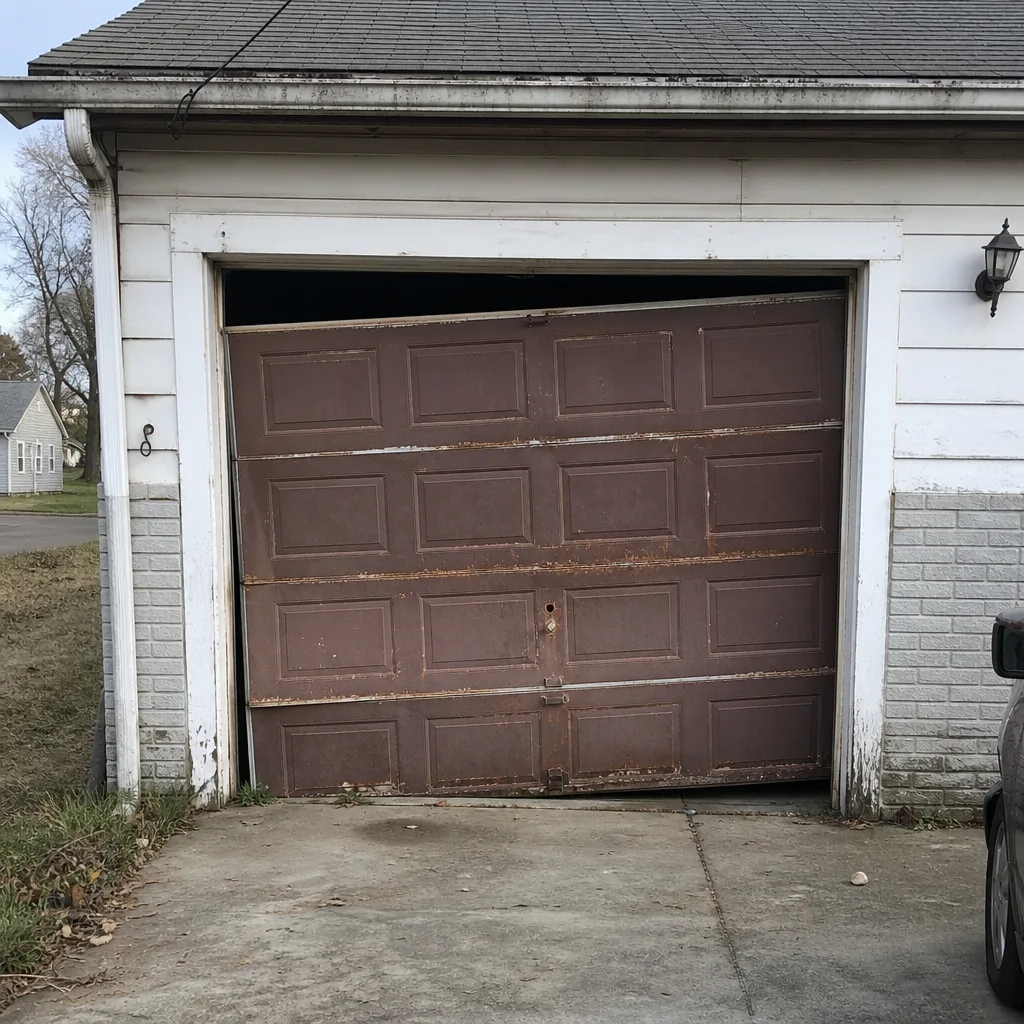
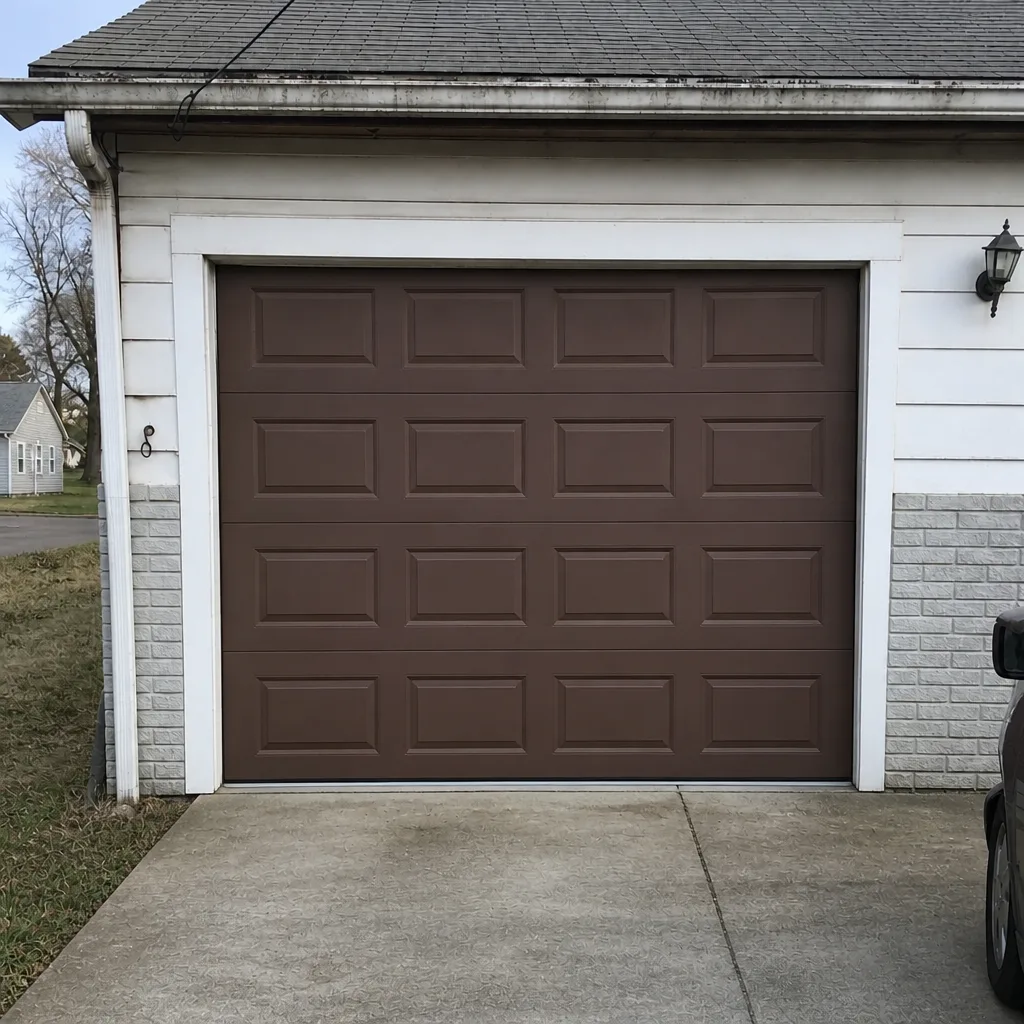
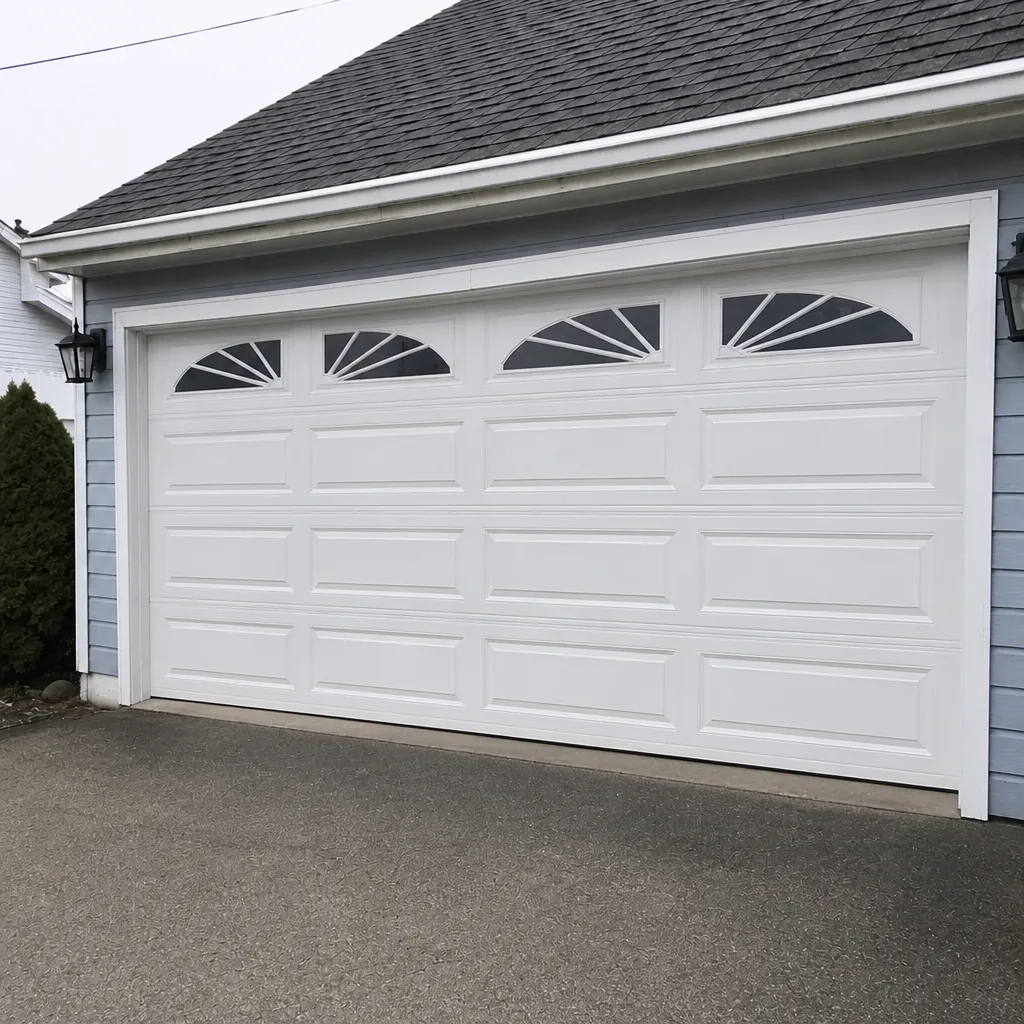
See the difference
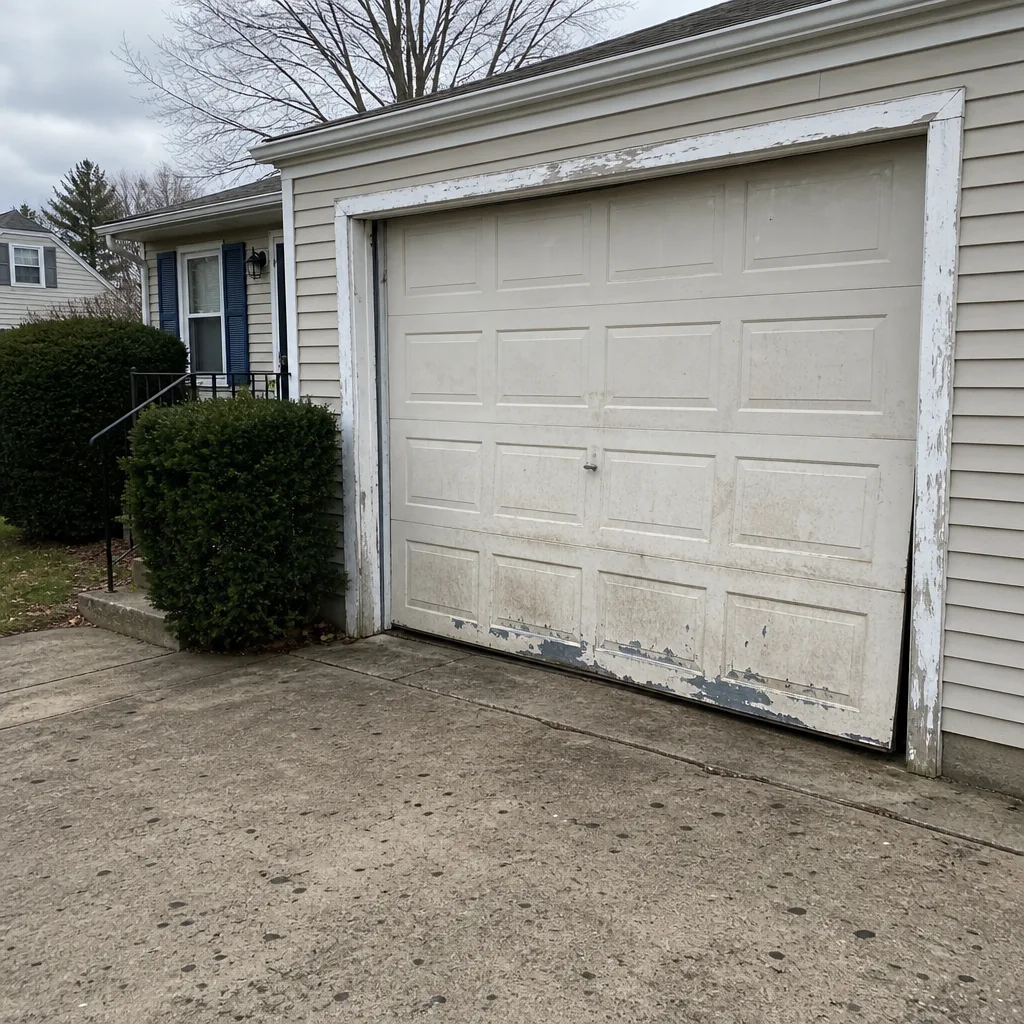 Before
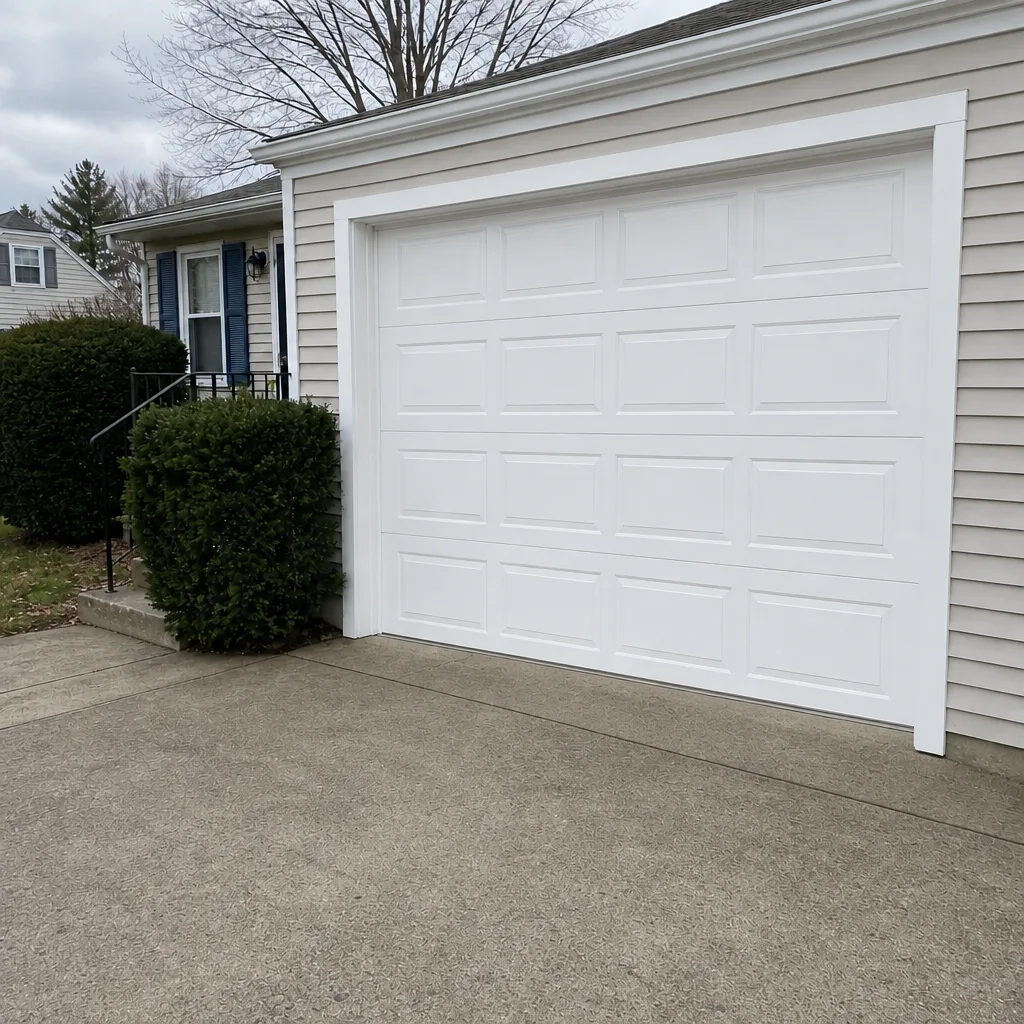 After
 Before
 After
 Before
 After
When to Call a Professional
Call us when the warning sign is a spring, a cable, a track, or anything you can’t diagnose without risking your hands. A loud bang followed by a door that won’t move, a door that hangs crooked, a cable off its drum, an opener that grinds with the door stuck – those are all “call now.” A door that hesitates at the start of the cycle for days, one that’s slower every month, or a persistent grinding that’s been there for a week or two is a “book this week” call, not an emergency. And if you’ve done the visual checks and you’re just not sure, book a visit – diagnosis is free, and knowing what’s happening is worth more than guessing.
Chicopee Garage Door Repair Pros works on the brand already in your garage, across LiftMaster, Chamberlain, Genie, Clopay, Amarr, Wayne Dalton, Craftsman, and Raynor systems. Our technicians have up to 15 years of experience, and we handle everything from a spring swap to a full door install without sending you to a second contractor. Emergency service is available for the time-sensitive failures covered above. We offer free estimates in Chicopee – call (855) 658-4190.
Frequently Asked Questions
The most common early signs are a half-second hesitation at the start of the cycle, a door that lifts slightly unevenly, persistent grinding from worn rollers, and an opener that needs a second press. In Chicopee, spring and cable concerns rise through the winter freeze-thaw cycle, so early spring is when we see the most spring and cable symptoms. Any of these is worth a scheduled look – call (855) 658-4190 and we’ll book a free estimate.
A spring that’s about to fail usually shows a visible gap or uneven coil, or makes the door hesitate at the top of the cycle before it moves. In many cases there’s a subtle change in the door’s motion – a slight lurch or a slower start – days to weeks before the snap. Don’t test it by hand; visual check only, from standing distance. Call (855) 658-4190 for a free diagnosis.
Not necessarily right away, but it should go on the schedule and not just get “waited out.” Slow operation is one of the earliest signals in this guide, and it usually costs less to fix now than to fix after the door fails. If you’re not sure which category your door is in, call (855) 658-4190 and describe what you’re seeing – the estimate is free.
No. A torsion spring holds enough tension to cause serious injury on release even with the door closed, and extension springs store energy the same way. Springs are the highest-risk repair in the trade, and they’re why we list spring work separately – it’s not a “watch a video and get a wrench” job. Call (855) 658-4190 and let a trained technician handle it.
Cold weather stiffens rollers, hinges, and lubricant, which produces a seasonal squeal that quiets when the weather warms. Squealing that survives into spring is usually a wearing bearing, and that’s worth a scheduled check. Whether it’s seasonal or not, call (855) 658-4190 if you’re not sure.
If the opener runs but the door lurches, hesitates, or lifts unevenly, the door hardware – springs, cables, rollers – is usually the cause, and the opener is just struggling. If the opener makes no sound, reverses immediately, or needs a second press, the opener is more likely the source. Many symptoms overlap, so a diagnostic visit is the fastest way to know. Call (855) 658-4190 for a free estimate.
If it’s LiftMaster, Chamberlain, Genie, Clopay, Amarr, Wayne Dalton, Craftsman, or Raynor, yes – those are the eight brands we work on most. Whether it’s a legacy Craftsman opener or a Raynor door you’ve had for years, we know the systems and can match the right parts. Call (855) 658-4190 to book.
It depends on the repair: roller replacements sit at the low end, while spring and cable repairs cost more because they’re the highest-risk work in the trade. We quote the price and agree it before any work starts, so there’s no surprise on the invoice. Call (855) 658-4190 for a free estimate – the written estimate sets the final price.
The Bottom Line
The warning signs that matter most on your garage door are the quiet ones – a hesitation, a slowdown, a squeal that survives the spring, a door that lifts a touch crooked. Catch them and you’re looking at a scheduled repair. Ignore them and the same door becomes a morning emergency. Read the sound, watch the motion, inspect from distance without touching, and know which signs mean “book this week” versus “stop using the door today.” If you’re not sure which side you’re on, that’s what a free estimate is for. Call Chicopee Garage Door Repair Pros at (855) 658-4190 and we’ll take a look at your Chicopee door.
If you’re starting fresh and want the full view of our services, our Chicopee Garage Door Repair Pros page is the place to start. And when the spring finally gives, that’s a call, not a project – one call, full fix.
Written by the team at Chicopee Garage Door Repair Pros.