Last updated November 23, 2026
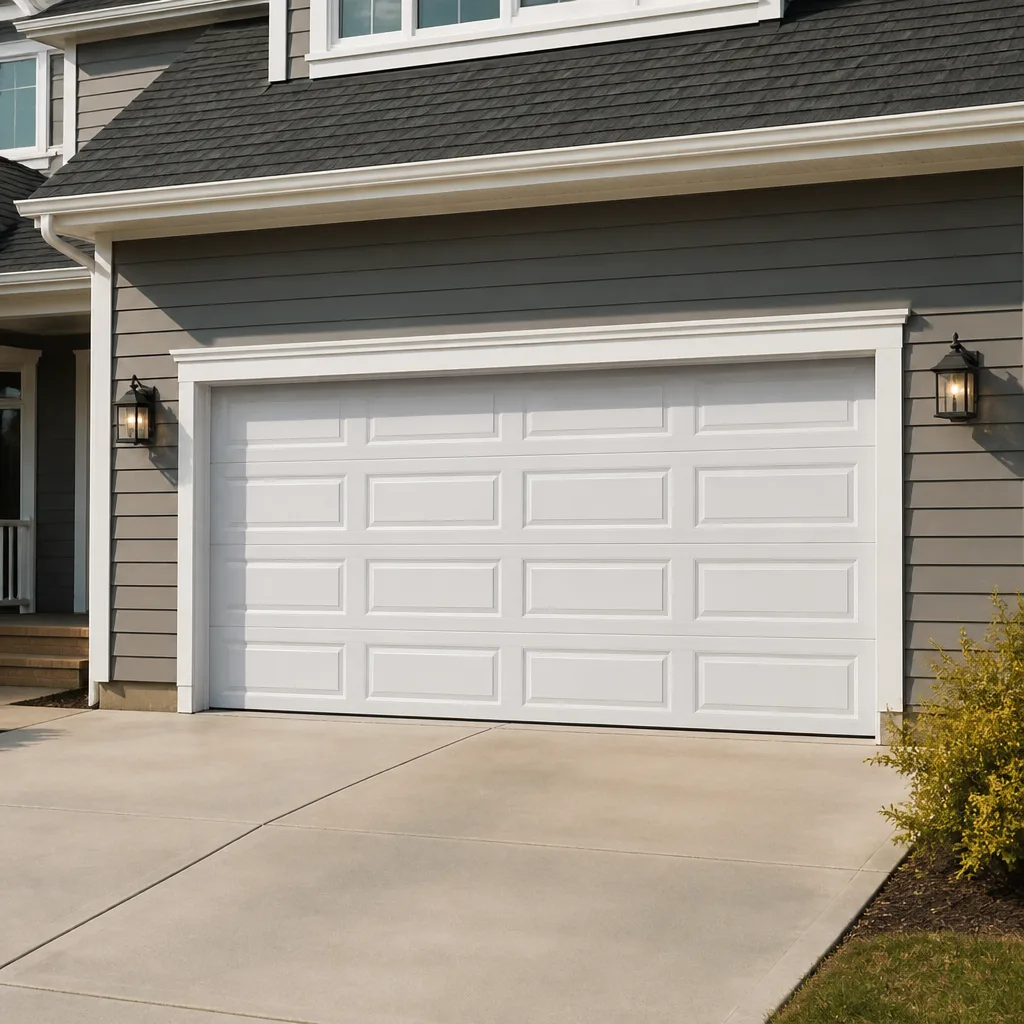 Raised-panel steel
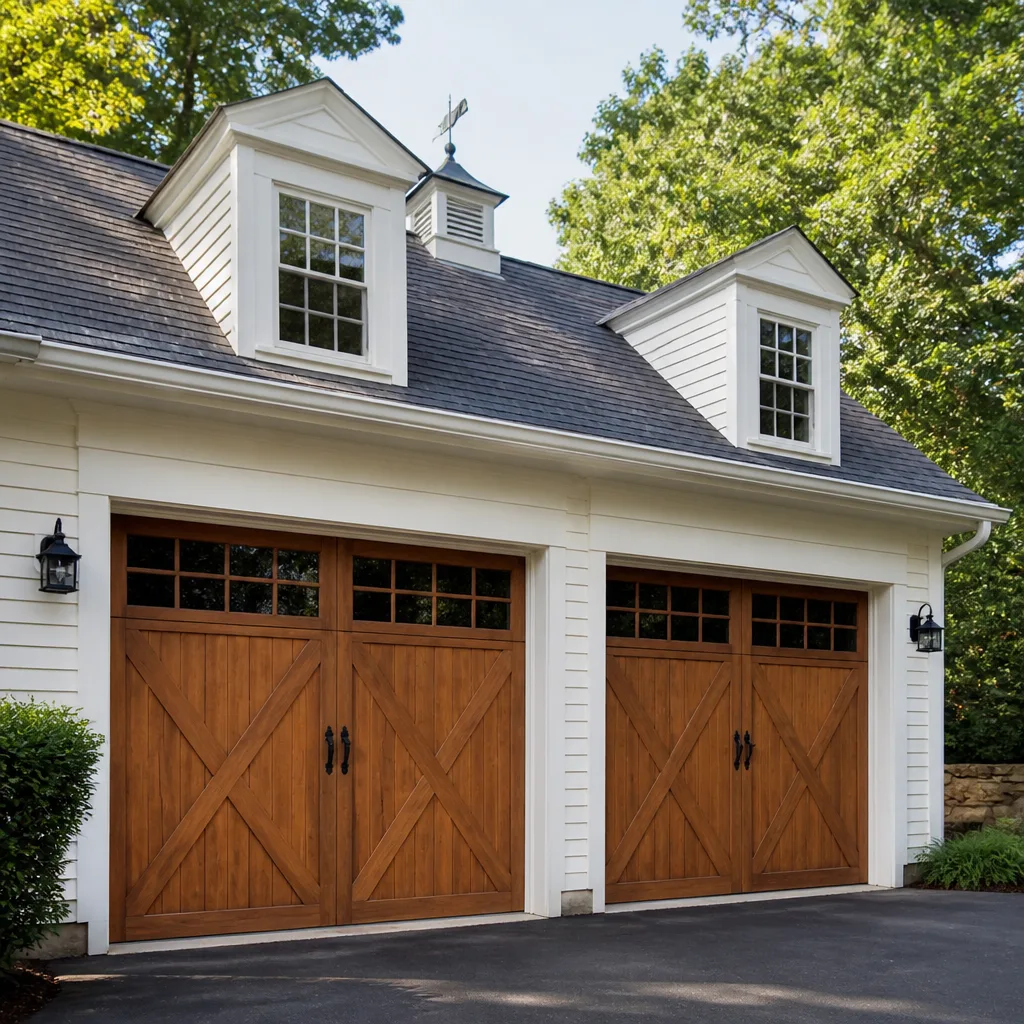 Carriage house
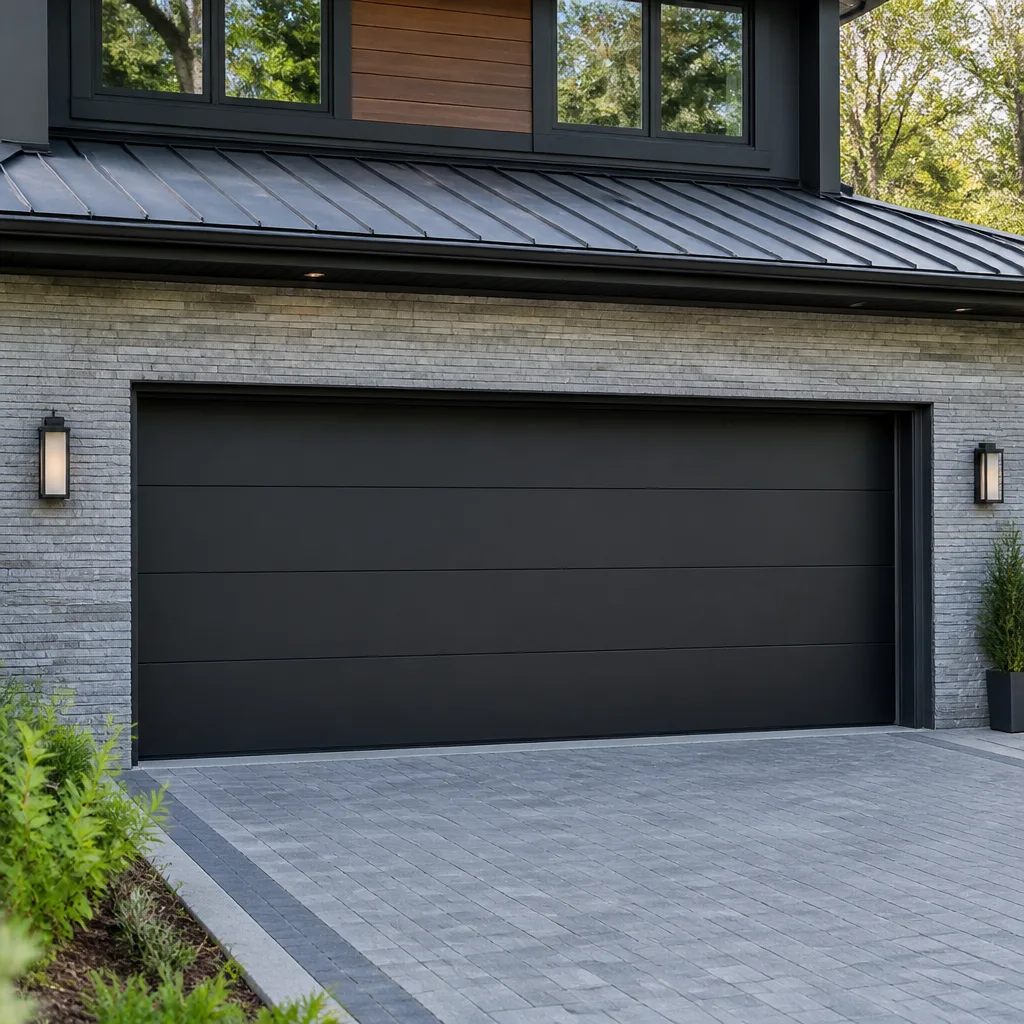 Modern flush
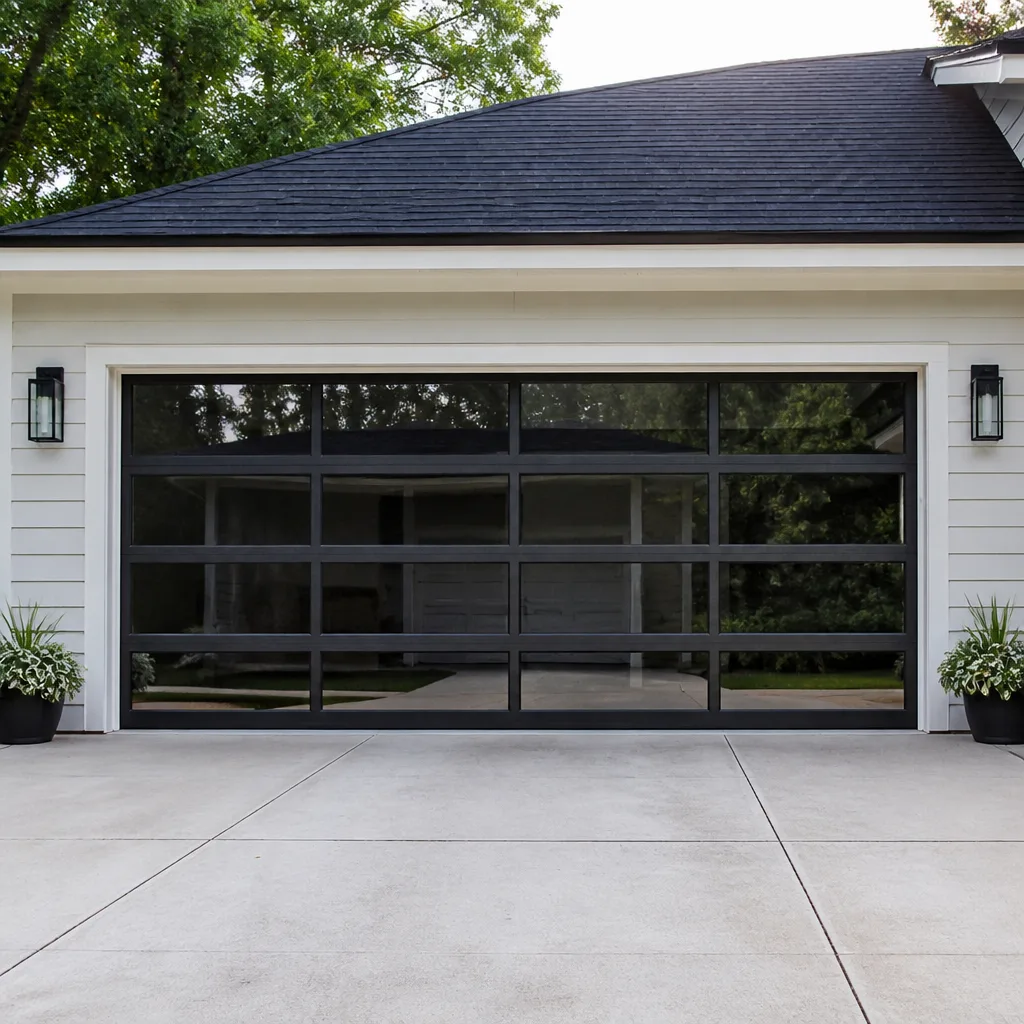 Full-view glass
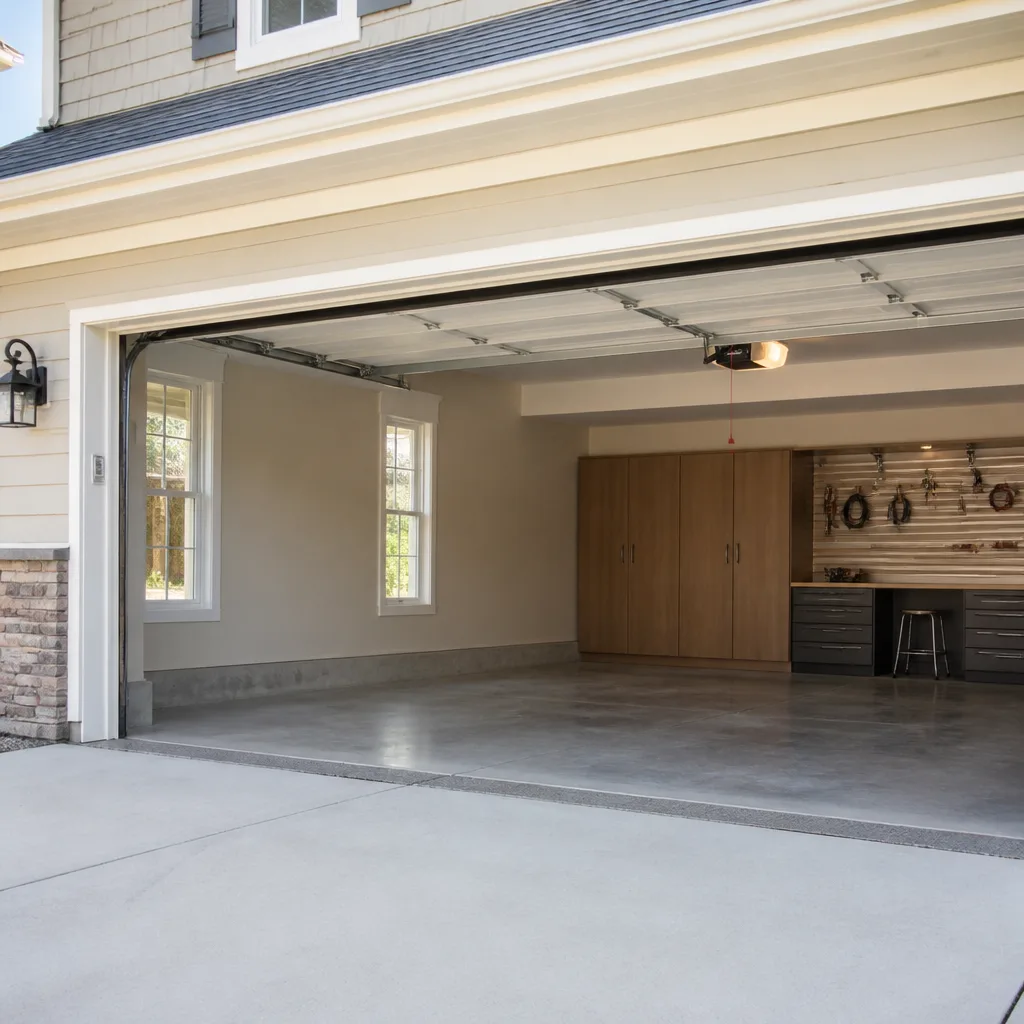 LiftMaster openers
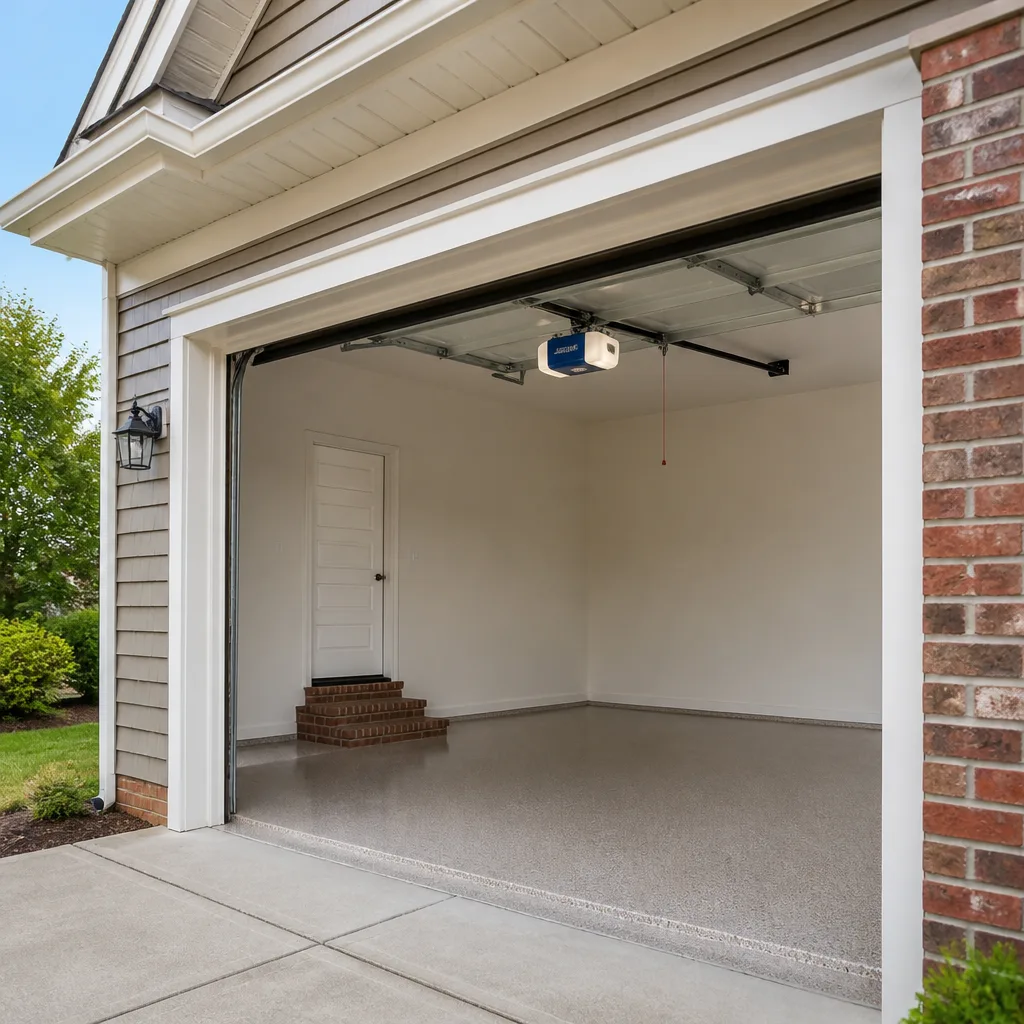 Chamberlain openers
Full 25-point door and opener safety check with every visit - springs, cables, rollers, tracks, and your LiftMaster or Chamberlain opener included
You get a price before we start. It does not change when the pro arrives.
Get your free estimateThe Complete Guide to Garage Doors in Chicopee
Most Chicopee homes were built between the 1940s and 1980s, and that single fact explains why so many garage door projects go sideways in this city. The rough opening, header height, and framing your new door needs to fit weren’t designed with modern door specs in mind. A door that drops perfectly into a 1990s subdivision in another state may fight you the whole way in a Chicopee colonial or a postwar ranch near Fairview. That mismatch is the number one reason installs get complicated here. In this guide we’ll walk through how Chicopee’s housing stock affects sizing and retrofit compatibility, which materials actually hold up against Pioneer Valley winters, what triggers a building permit, and which brands leave you waiting on out-of-state parts.
Quick Answer
Garage door work in Chicopee comes down to three things: measuring for an older, often non-standard rough opening, choosing materials that survive Pioneer Valley freeze-thaw and summer humidity, and confirming whether your specific replacement triggers a building permit. Most simple repairs (springs, cables, openers, rollers) don’t need a permit, while structural changes to the opening or header usually do. Get the measurement and the permit question answered first, and everything else follows.
Styles & brands we work with
- Raised-panel steel
- Carriage house
- Modern flush
- Full-view glass
- LiftMaster openers
- Chamberlain openers
Table of Contents
- How Chicopee’s Older Housing Stock Affects Door Sizing and Retrofit
- Which Door Materials Hold Up Against Pioneer Valley Winters
- What Big-Box Installers Stock vs. What a Local Specialist Can Source
- When Replacing a Garage Door in Chicopee Requires a Permit
- Brand-by-Brand: What’s Serviceable Locally and What Isn’t
- The Repairs We See Most in Chicopee and What They Involve
- How to Choose a Garage Door Contractor in Chicopee
- Frequently Asked Questions
How Chicopee’s Older Housing Stock Affects Door Sizing and Retrofit
Chicopee grew fast in the middle of the twentieth century, and the garages built during that growth follow the construction logic of their era, not the standardized door dimensions of today. A garage framed in the 1950s might have a header that sits lower than a modern door expects, or framing that’s a fraction of an inch off square after decades of settling. None of that is unusual. What matters is that it gets measured and accounted for before a door is ordered.
When we assess a door replacement in Chicopee, the first thing we look at is the rough opening: the actual width and height of the framed hole the door sits in, not the size of the door currently hanging there. On older homes those two numbers often disagree. A door that was installed in 1965 and has sagged or been adjusted over the decades may not reflect what the framing can actually accept. We measure the opening, check the header height, and look at whether the jamb is plumb and the floor is level.
A few retrofit issues come up again and again in Chicopee’s older neighborhoods:
- Low header clearance. Some postwar garages were framed with less headroom than a modern sectional door needs, which can limit how the door tracks back into the ceiling space.
- Out-of-square openings. Decades of settling can twist a frame slightly. A good installer accounts for it; a rushed one forces the door to fit and creates problems later.
- Narrow single-car openings. Many older Chicopee garages were built for cars that were smaller than today’s, and the opening reflects it.
- Old framing that’s been patched. Repeated repairs over the years can leave a jamb with mixed materials and inconsistent attachment points.
The practical upshot: if your home was built before roughly 1990, treat a door replacement as a measuring job first and a shopping job second. A door selected from a catalog without a site measurement is a gamble. A proper measure takes the guesswork out and lets the installer flag anything the opening needs before the door is ordered.
Which Door Materials Hold Up Against Pioneer Valley Winters
Chicopee’s climate is hard on garage doors in a specific way. The Pioneer Valley gets cold winters, but the real damage comes from the swing between seasons: freeze-thaw cycles in late winter and early spring, then humid summers that push moisture into anything porous. A door that looks fine in a showroom can struggle here if the material doesn’t handle that cycle.
Here’s how the main material options tend to perform in this climate:
- Steel. The most common choice for good reason. Steel handles temperature swings well, holds paint, and resists the humidity that comes with Chicopee summers. The weak point is the bottom section, which sits closest to road splash and snowmelt, so a well-sealed bottom and regular inspection matter. Steel is also the easiest to repair when a panel gets dented.
- Aluminum. Lighter than steel and resistant to rust, but it dents more easily. Fine for a low-traffic garage, less ideal for a busy family driveway.
- Wood. Beautiful, but the highest-maintenance option in this climate. Wood moves with moisture, which means annual sealing and attention to any spot where finish has worn through. In a valley with humid summers, wood demands real upkeep.
- Composite and wood-look options. These give you the appearance of wood without the swelling and rot issues, and they handle freeze-thaw better than natural wood. A solid middle ground if you want the look without the maintenance load.
- Insulated vs. non-insulated. If the garage is attached and you spend time in it or use the room above it, an insulated door helps moderate temperature and cuts noise. For a detached, unheated garage, insulation matters less.
The other climate consideration is wind and snow load on the door itself. A door that’s too light for its opening, or one with weak hardware, can flex and strain under the weight of snow that slides off a roof. Matching the door’s construction and hardware to the opening is part of getting this right, and it’s something we look at on every Chicopee install.
What Big-Box Installers Stock vs. What a Local Specialist Can Source
Here’s a pattern worth understanding before you buy. A big-box retailer sells and installs the doors it stocks, which means its selection is built around the most common sizes and models rather than your specific opening. If your Chicopee garage has a non-standard width, a low header, or an older frame that needs a custom fit, the retailer’s answer is often to make the door fit the stock size rather than source a door that fits the opening.
A specialist works the other way around. The opening is the fixed reality; the door is the variable. That means sourcing:
- Doors in the actual width and height your opening needs, including non-standard sizes.
- Brand-matched components so the new door works with the existing hardware and opener rather than forcing a full system swap.
- Reinforcement or hardware upgrades for older openings that need extra support.
- Panels and sections for replacing part of a door rather than the whole thing, when that’s the better call.
The difference shows up most on pre-1990 homes, which is most of Chicopee. We’ve seen plenty of openings where a stock-size door would have required framing adjustments that a homeowner didn’t expect and a specialist could avoid by ordering to measure. It’s not about the door being fancier; it’s about the door being right for the hole it goes in.
There’s also a service-after-the-sale difference. A specialist can come back and tune, repair, or adjust the door and hardware they installed, because they work on those systems as a core trade. If your goal is a single relationship that covers the door from install through years of garage door repair, that continuity is worth weighing against a one-time retail transaction.
When Replacing a Garage Door in Chicopee Requires a Permit
Whether you need a permit depends on what’s actually changing, not just on the word “replacement.” In general, swapping a door of the same size into an existing opening is treated differently from changing the opening itself. Here’s the rough split:
Usually no permit:
- Replacing a door with one of the same size and type in the existing opening.
- Repairing springs, cables, rollers, hinges, or tracks.
- Repairing or replacing an opener on existing wiring.
Usually triggers a permit:
- Changing the size of the opening (making it wider or taller).
- Modifying the header, framing, or structure to accommodate a new door.
- Converting a garage to living space or changing its structural use.
- Adding or altering electrical work for a new opener circuit.
These are general rules, and Chicopee has its own building department with its own interpretation of them. Before you commit to a project that involves any structural change, call the city’s building department and describe exactly what you’re planning. They’ll tell you whether a permit is required and what the process looks like. A reputable contractor will also raise the permit question early rather than after the door arrives, and will point you to the department rather than guess. If a permit is needed, plan for the inspection timeline in your schedule.
Brand-by-Brand: What’s Serviceable Locally and What Isn’t
One of the practical frustrations in this trade is a door or opener that’s perfectly repairable, but only with a part that has to come from out of state. Chicopee homeowners feel that most when a system is old, unusual, or was installed by a company that no longer exists. Knowing which brands are easy to service locally helps you make a smarter decision, both when repairing and when buying new.
We work on the brand already in your garage. Our technicians are trained across eight of the most widely installed residential brands, which means most systems don’t need to be replaced just because a part failed:
- LiftMaster and Chamberlain. Two of the most common opener brands in the region, with strong parts availability. Both also cover the smart-home and Wi-Fi opener category, so newer connected units are well supported.
- Genie. Widely installed, with parts that are generally easy to source. Older Genie units are often worth repairing rather than replacing.
- Craftsman. Extremely common on older Chicopee homes. Many Craftsman openers are still fully serviceable, and brand-matched parts are available for most models.
- Clopay, Amarr, Wayne Dalton, and Raynor. All four are door brands we handle for both repair and replacement. Raynor in particular shows up on some older installations where original hardware matters, and we can match sections and components rather than forcing a full swap.
The brand question matters most for openers. If yours is a modern smart-compatible unit, garage door opener repair is usually straightforward: the failure is typically in a gear, a logic board, a sensor, or the belt or chain. If it’s an older unit, the judgment call is whether repair costs less than replacement and whether parts are still obtainable. Either way, a technician who knows the brand can diagnose faster and avoid the “we’ll just replace the whole thing” reflex that comes from unfamiliarity.
For doors, the brand match matters for panel replacement and hardware compatibility. When only one section of a Clopay or Amarr door is damaged, matching the section keeps the door uniform and avoids a full replacement. That capability is one reason working with a specialist who handles multiple brands beats working with an installer tied to a single manufacturer.
The Repairs We See Most in Chicopee and What They Involve
Every repair has its own logic, and understanding what’s involved helps you recognize when a problem needs professional attention versus when it can wait. Here are the failures that come up most on Chicopee doors.
Broken springs
Springs are the most mechanically demanding repair in this trade, and the one we treat most seriously. A torsion or extension spring stores enormous tension, and when it fails it does so with force. This is never a do-it-yourself fix. The repair involves relieving the remaining tension safely, removing the failed spring, and installing a correctly rated replacement. On a two-spring setup, the springs are a matched pair, so a professional will often recommend replacing both together so they wear evenly. That’s a judgment based on the system, not an upsell.
Off-track doors
A door that has jumped its tracks, often after a cable failure or an impact, can be bent or wedged. Getting it back on track safely means relieving tension first, straightening or replacing bent track, and checking the rollers and hinges. Forcing a stuck door back into place risks bending panels or causing injury.
Opener failures
Opener problems range from a stripped gear to a failed logic board to a misaligned safety sensor. The diagnosis matters more than the part swap, since the same symptom (door won’t close) can come from the sensor, the travel limits, the force settings, or the opener itself. A brand-trained technician knows which systems share failure patterns.
Cable and roller wear
Cables fray and rollers wear out over years of use. Both are inexpensive parts, but a frayed cable is a safety issue because it can snap under load. Rollers that have gone flat or seized cause the door to drag and strain the opener.
Because some of these failures leave a door stuck open or stuck shut, we keep garage door spring repair and emergency response as core services rather than add-ons. When your door won’t move and you need it to, call us and we’ll get a technician out to diagnose it.
How to Choose a Garage Door Contractor in Chicopee
Not every company that lists garage doors actually knows garage doors. The market is full of general handymen and big-box installers who treat it as a side job. Here’s how to tell a specialist from a generalist before you hire:
- Ask what brands they service. A specialist handles several major brands and can talk about the differences. A generalist will say “we can do any door” without being able to name the systems.
- Ask about springs specifically. Spring work is the highest-risk repair in the trade. A company that treats it as routine, core work has the right tools and the right training. One that seems unsure should raise a flag.
- Ask for a site measurement before quoting. Any door replacement should start with the actual rough opening, not the size of the old door. If the quote comes before the measure, the quote is a guess.
- Ask who handles permits. On any structural change, the contractor should raise the permit question and point you to the Chicopee building department, not wave it off.
- Confirm the diagnosis is upfront. A good contractor tells you what’s actually wrong before replacing parts. If the first answer is “you need a whole new door” without a diagnosis, get a second opinion.
- Check that the price is stated before work begins. You should know the cost and agree to it before anyone picks up a tool.
Our technicians have up to 15 years of experience, and we’ve built our work around the full service lifecycle: diagnosing a problem, repairing it, and installing a new door when that’s the right call. If we tell you a repair will work, that’s based on what the system actually needs.
Common Mistakes to Avoid
- Ordering a door without measuring the rough opening. On Chicopee’s older homes, the size of the old door is not the size the new one needs. Always measure the framed opening before ordering.
- Treating a broken spring as a DIY job. The tension in a spring can cause serious injury if released wrong. This is one repair that should always go to a trained professional.
- Assuming a stock-size door will fit. A big-box installer’s selection is limited to what they stock. If your opening is non-standard, that limitation costs you a proper fit.
- Skipping the permit question on structural changes. Resizing an opening or changing a header may require a permit in Chicopee. Call the building department before the work starts.
- Replacing an opener when a repair would do. Many older Craftman, Chamberlain, and Genie units are fully repairable. Get a diagnosis before replacing.
- Ignoring a frayed cable. A frayed cable can snap under load, which can drop a door on a vehicle or a person. Replace worn cables promptly.
- Choosing a door material for looks alone. Wood looks great but demands real maintenance in Pioneer Valley humidity. Match the material to the climate and your willingness to maintain it.
See the difference
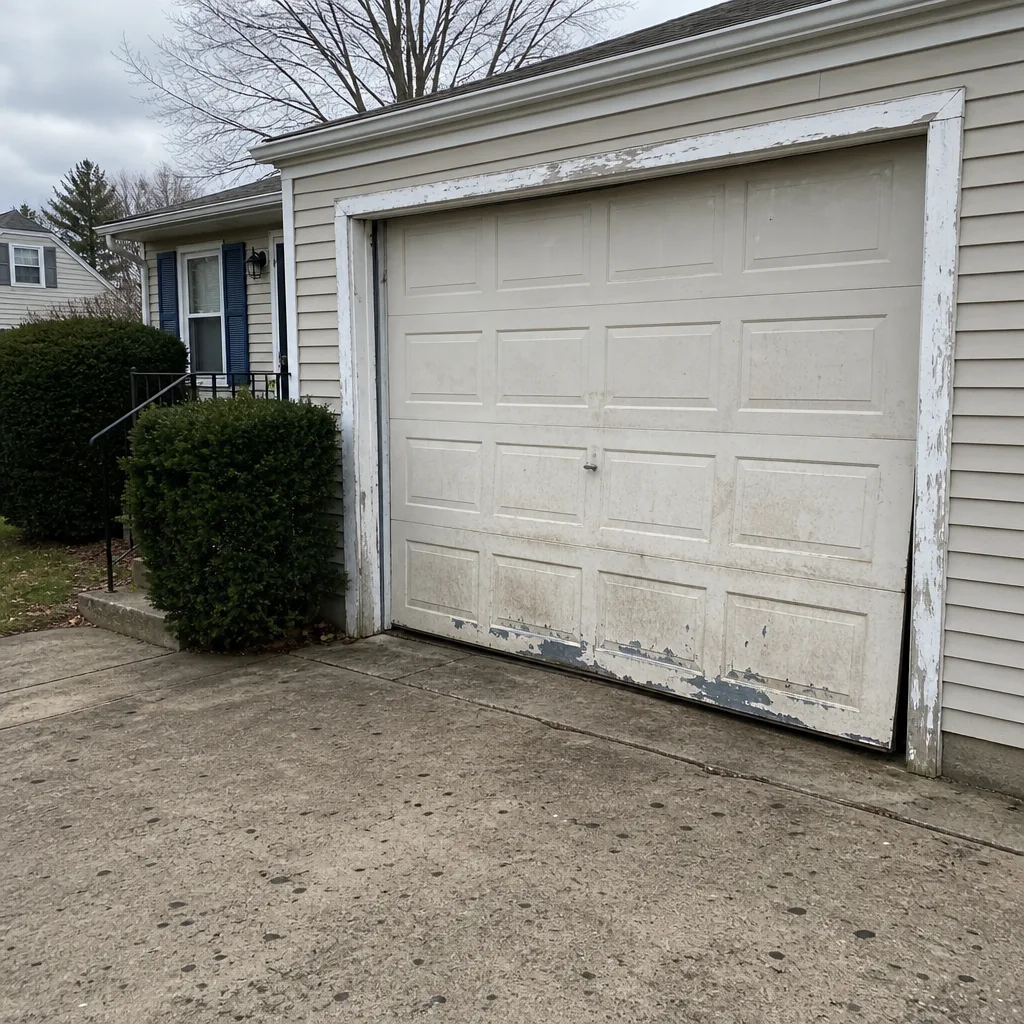 Before
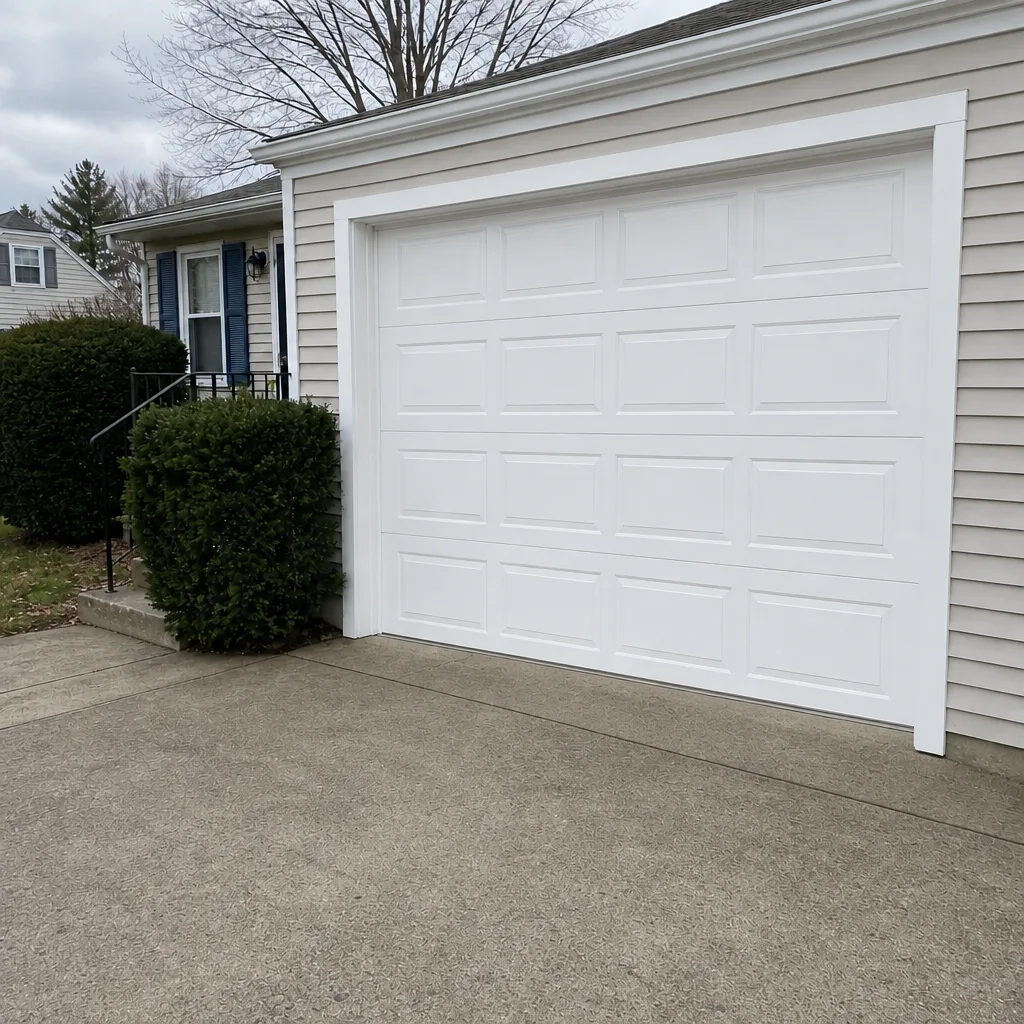 After
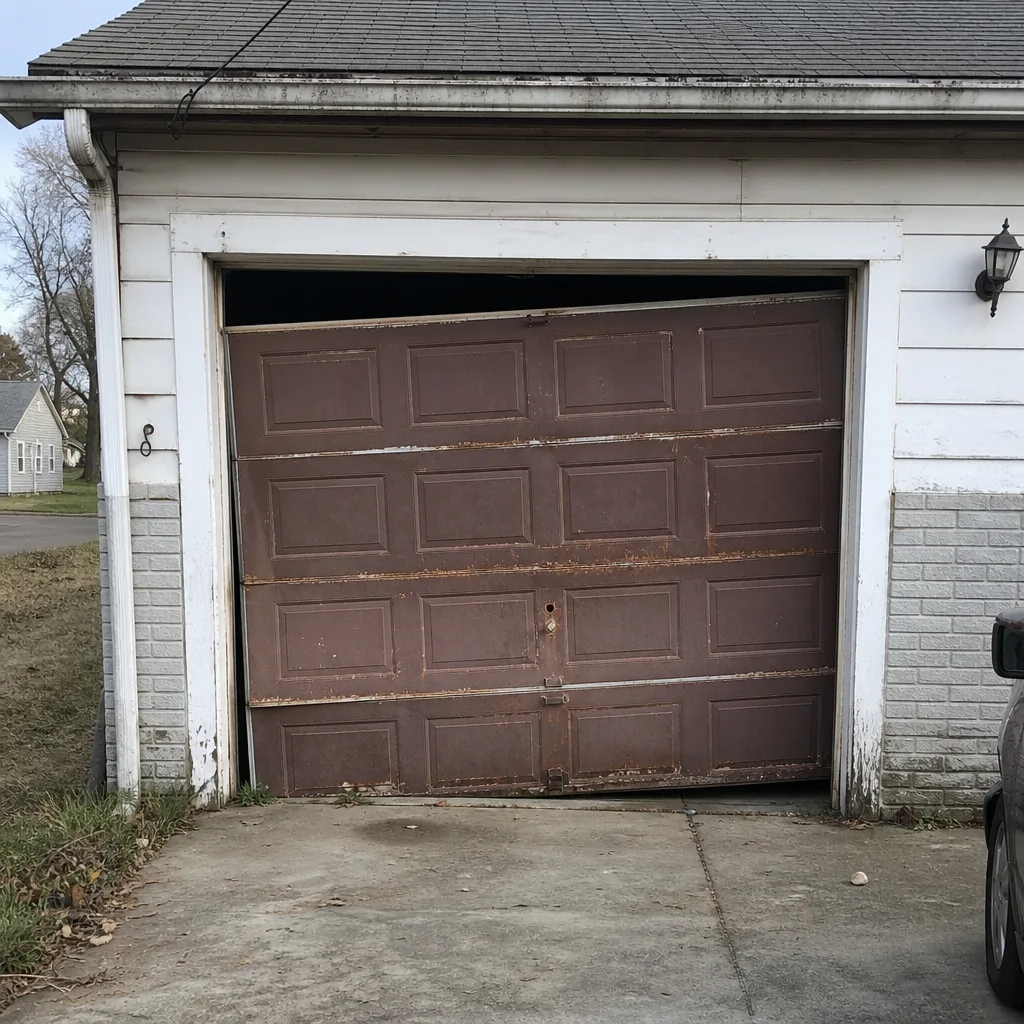 Before
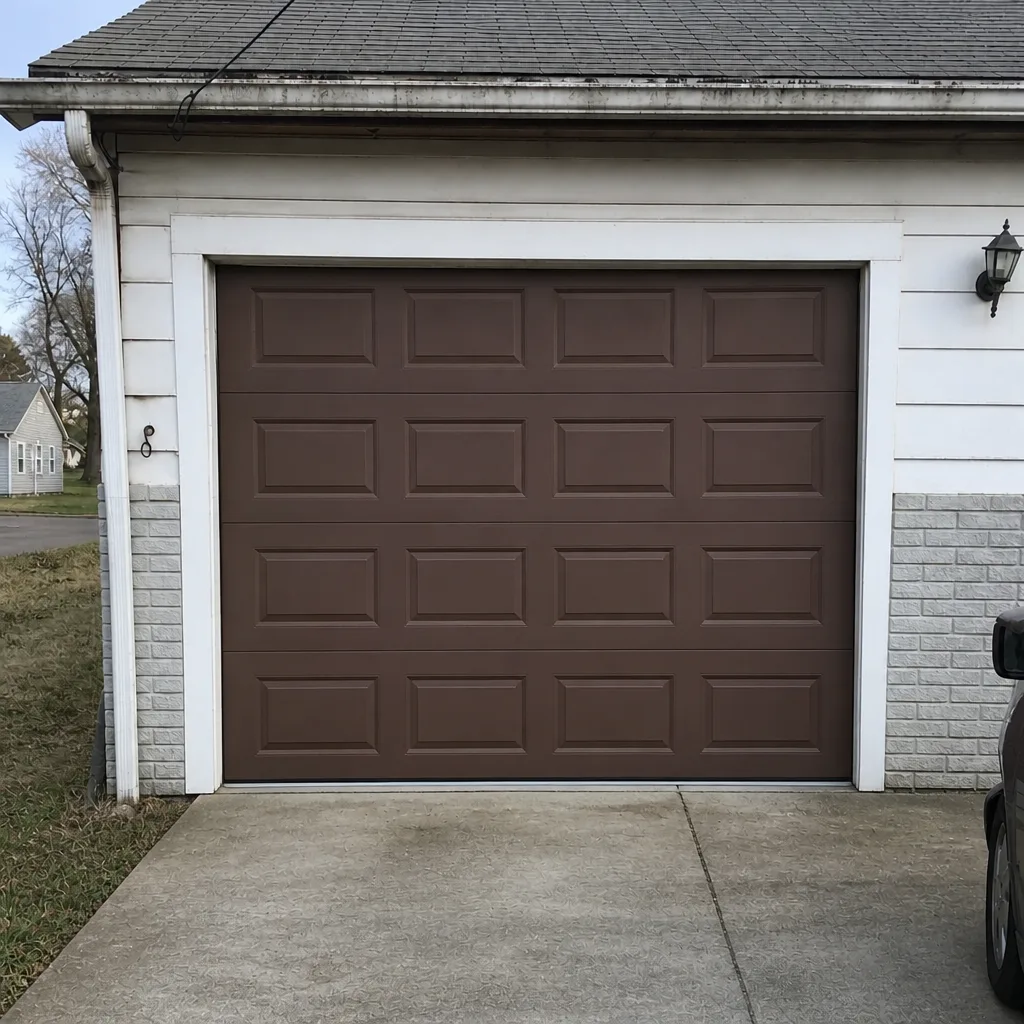 After
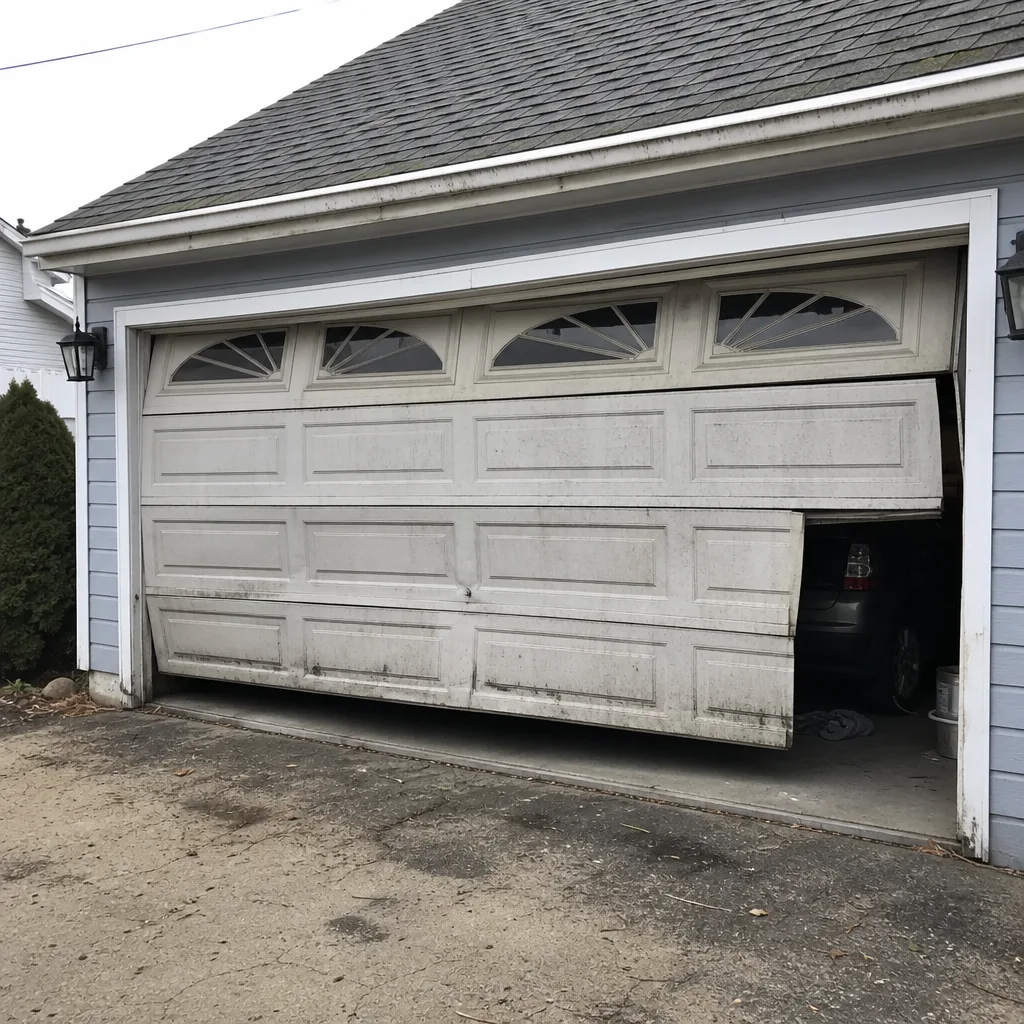 Before
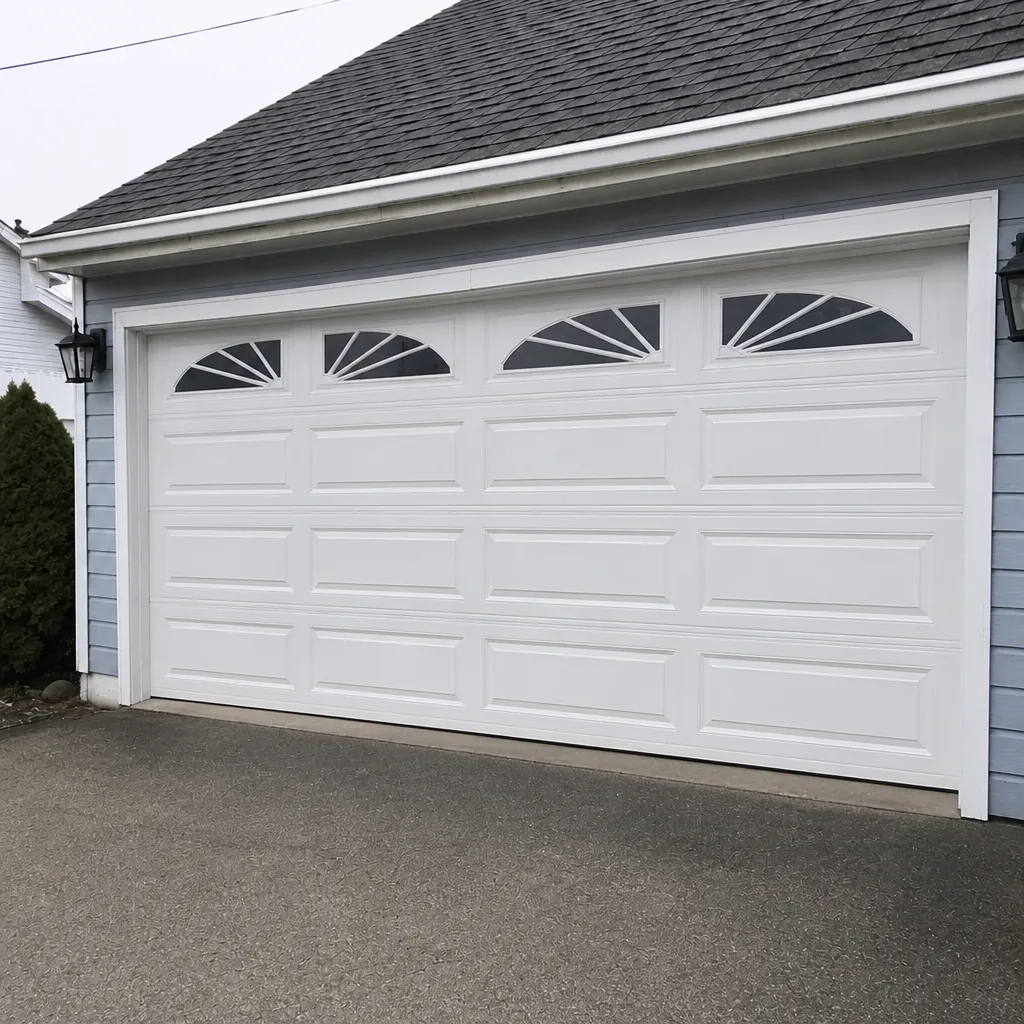 After
When to Call a Professional
Some situations clearly call for a trained technician: a snapped spring, a door that’s come off its tracks, a frayed or snapped cable, an opener that runs but won’t move the door, or a door that has become a safety worry because it’s unbalanced or won’t close. Any of these should be handled by someone who knows the system and the risks. And anything involving the tension of a spring is not a place to experiment. If you’re weighing a repair against a replacement and you’re not sure which way to go, a diagnosis settles it. Chicopee Garage Door Repair Pros offers free estimates in Chicopee – call (855) 658-4190 and we’ll take a look.
Frequently Asked Questions
It depends on what’s changing. Replacing a door with one of the same size in the existing opening usually doesn’t require a permit, while resizing the opening, modifying the header, or changing the structure usually does. Call the Chicopee building department to confirm your specific project before work begins.
Repair costs vary widely by what’s wrong, from a simple roller or opener fix to a full spring replacement. Because pricing depends on the system and the failure, the honest answer is that you need a diagnosis and a written quote. We quote the price and agree it with you before any work starts. Call (855) 658-4190 for a free estimate.
In most cases, yes. We work on eight of the most widely installed residential brands, including LiftMaster, Chamberlain, Genie, Craftsman, Clopay, Amarr, Wayne Dalton, and Raynor. That means we diagnose and repair the system in your garage rather than pushing a full replacement because we don’t recognize the parts.
Cold weather exposes problems that warm weather hides. Stiff grease, a slightly misaligned safety sensor, or a door that’s out of balance can all cause a door to stop short as temperatures drop. If it happens repeatedly, it needs a diagnosis rather than repeated resets. Call (855) 658-4190 and we’ll take a look.
Usually, but it has to be measured first. Many Chicopee homes were built before 1990, and their openings often don’t match modern standard door sizes. A proper site measurement of the rough opening, header height, and jamb is the step that ensures the new door fits.
The local pros we connect you with are licensed and insured as their state requires. Ask for confirmation of their credentials before any work begins, and confirm the written quote before the job is started.
The Bottom Line
Chicopee’s climate and older housing stock shape every garage door decision more than any catalog does. Measure the opening before you buy, choose materials that handle freeze-thaw and humid summers, confirm the permit question before structural work, and pick a specialist who knows the brands already installed on your street. Whether you need a tune-up, an emergency repair, or a full new-door installation, the goal is the same: a door that fits right, works right, and lasts. Chicopee Garage Door Repair Pros handles the full range, from a snapped spring to a complete install. For a free estimate, call (855) 658-4190.
Written by the team at Chicopee Garage Door Repair Pros.