Last updated November 23, 2026
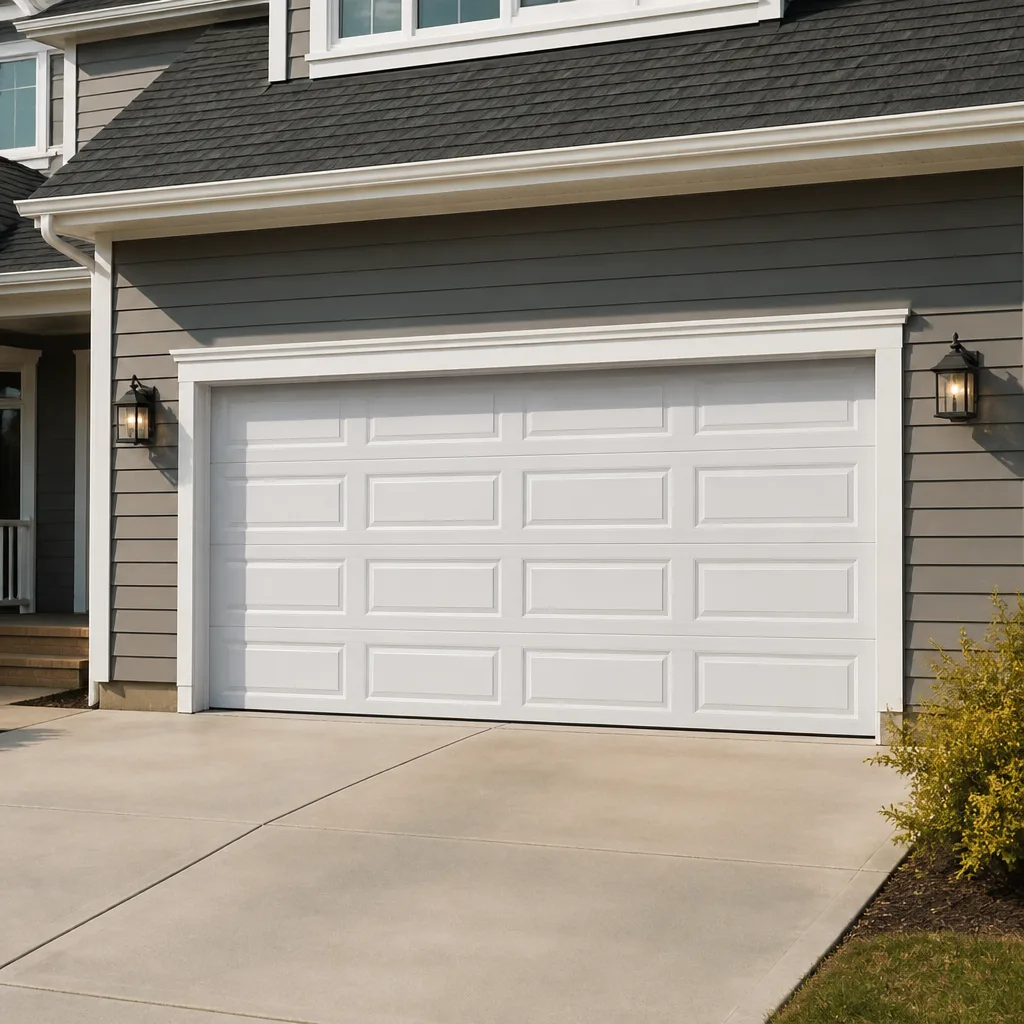 Raised-panel steel
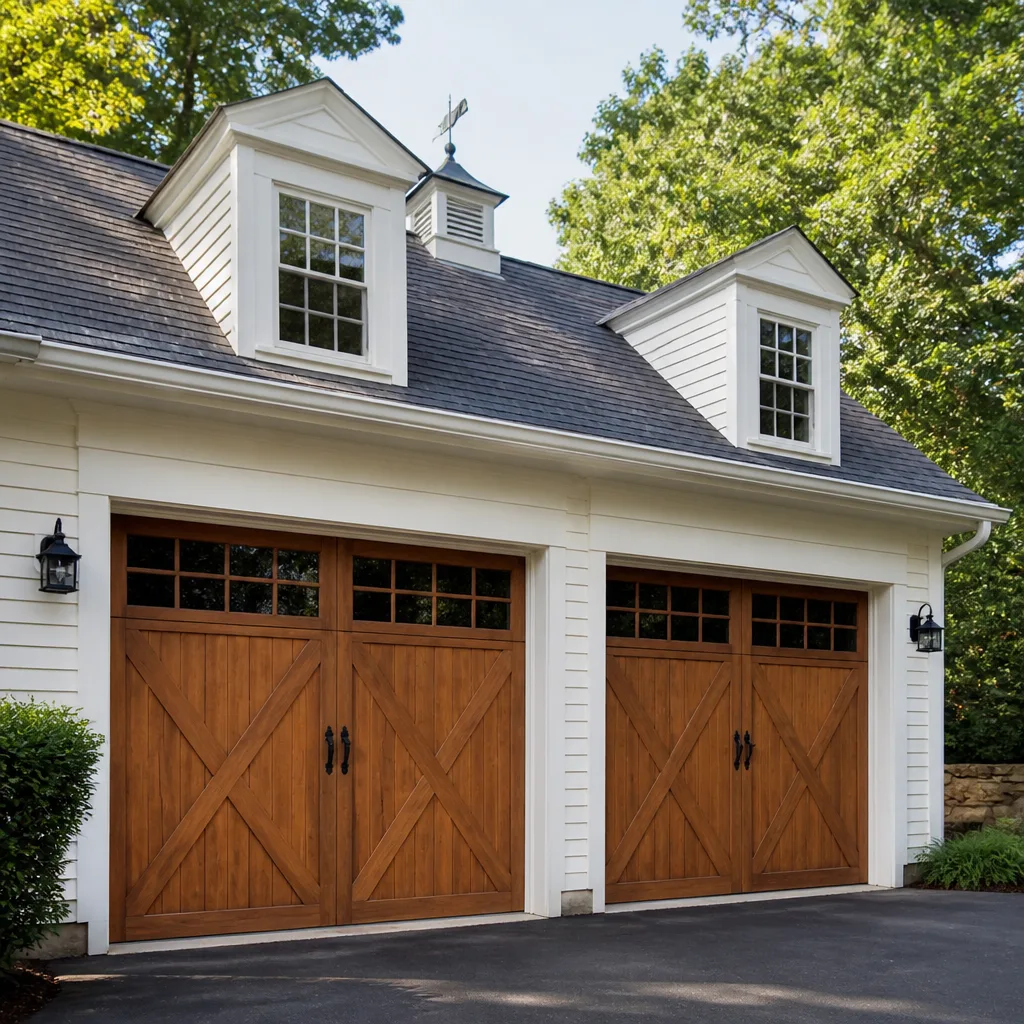 Carriage house
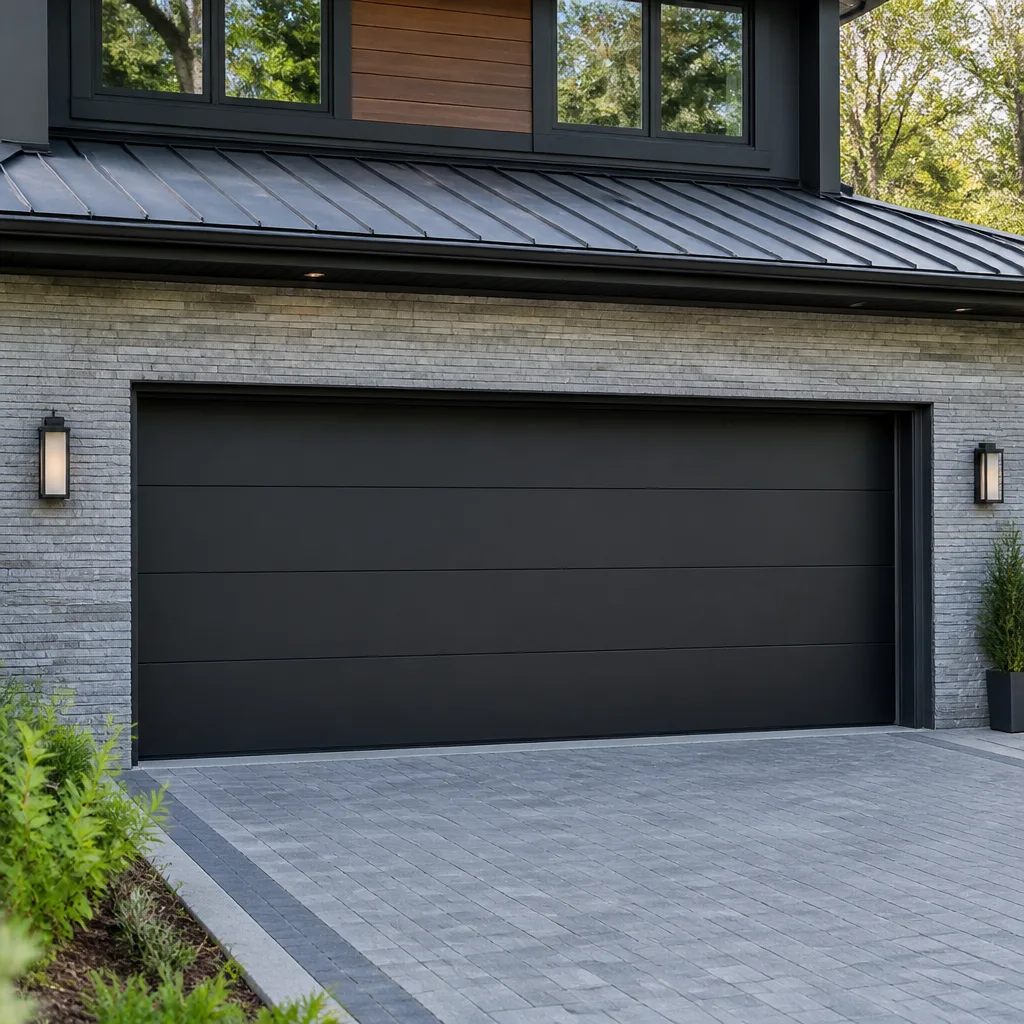 Modern flush
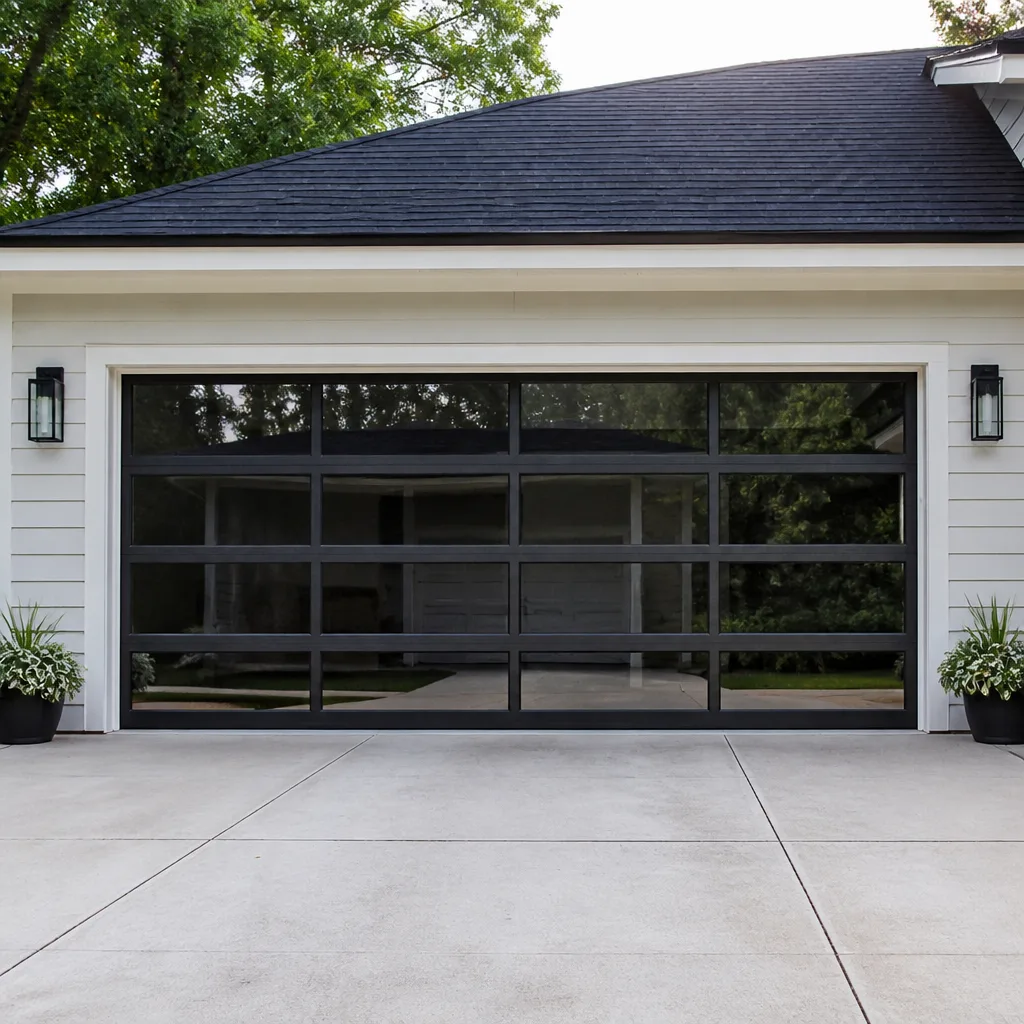 Full-view glass
 LiftMaster openers
 Chamberlain openers
Full 25-point door and opener safety check with every visit - springs, cables, rollers, tracks, and your LiftMaster or Chamberlain opener included
You get a price before we start. It does not change when the pro arrives.
Get your free estimateDIY vs Professional Garage Door: The Chicopee Homeowner’s Decision Guide
Most articles about garage door work frame the choice as a money question. Fix it yourself and save a few hundred dollars, or pay someone and save the weekend. We think that’s the wrong frame. This is really a physics question. The parts of a garage door system where a careful homeowner can genuinely save money are not the same parts where amateur work causes the worst injuries in the trade. Torsion springs store huge amounts of mechanical energy under tension, and when one lets go or a winding bar slips, that energy releases all at once. What this guide does is draw a clear line: the tasks you can reasonably handle, the ones you can assist with, and the ones that stay with a trained technician no matter how handy you are. We’ll cover Chicopee specifics along the way, from the houses and weather here to how Massachusetts treats unpermitted structural work.
Quick Answer
DIY is a reasonable choice for opener programming, remote and keypad setup, weatherstripping replacement, lubrication, and general cleaning and inspection. It is not a reasonable choice for torsion spring replacement, cable replacement, track realignment on a door that has come down, or any work where the door is under spring tension. Spring and cable work belongs to a trained technician because the stored energy can cause serious injury, and most garage door systems are heavier and more tightly loaded than they look from the ground.
Styles & brands we work with
- Raised-panel steel
- Carriage house
- Modern flush
- Full-view glass
- LiftMaster openers
- Chamberlain openers
Table of Contents
- The physics that decides the line for you
- What you can safely DIY (and why it’s a short list)
- Tasks you can assist with or prepare for
- What stays with a professional, no matter your skill level
- The actual cost comparison in Chicopee
- Massachusetts permit and insurance context
- How to be a smart client when you do call a pro
- Brand compatibility and why it matters locally
The Physics That Decides the Line For You
A torsion spring is a coil of steel that has been wound hundreds of times around a shaft. It lives directly above your door, holding a door that weighs somewhere between 130 and 300 pounds in most Chicopee homes. When the spring is balanced correctly, a person can lift the door with one hand. That’s the whole point. The spring is doing nearly all the work.
The number floating around in safety training is that a loaded torsion spring, when it fails suddenly, can release force comparable to a gunshot. We don’t repeat that to scare anyone. We repeat it because it explains why the trade draws a hard line at springs. When a torsion spring breaks while the door is down, the door won’t lift. When it breaks while the door is up, the door comes down fast. Neither is a job to attempt from a stepladder with a winding bar and a video tutorial paused on your phone.
Extension springs are a different design but carry the same hazard. They stretch along the horizontal tracks and store energy the same way. A broken extension spring snaps back toward the rear of the door and whatever or whoever is in its path.
The rest of the system is less loaded. Tracks guide the door. Rollers ride in the tracks. The opener pulls or pushes the door along its arc. Weatherstripping seals the edges. The hinges connect panels. Those parts live on the other side of the line, and that’s where DIY makes sense.
Chicopee’s housing stock matters here. A lot of the city’s homes have older, single-car garages with original hardware, or newer two-car garages on infill lots with tighter clearances. The tighter the clearance, the more important it is that a technician knows what they’re looking at before they touch anything under tension. In a cramped Chicopee garage, a failed spring has less space to travel before it hits something.
What You Can Safely DIY (and Why It’s a Short List)
Here’s the honest short list. These tasks are genuinely reasonable for a homeowner with a ladder, basic hand tools, and some patience. None of them involve stored spring energy.
- Programming remotes and keypads. Pairing a new remote to a LiftMaster, Chamberlain, Genie, or Craftsman opener is usually a button-press sequence on the motor unit. The manual walks through it and there’s no injury risk.
- Replacing batteries in remotes and wall consoles. Obvious, but worth saying: a dead opener often isn’t dead at all.
- Replacing weatherstripping and bottom seals. The rubber seal at the bottom of the door and the vinyl strips along the sides wear out and let in snow, rain, and cold air. Replacement is a pull, a trim, and a push.
- Lubrication. A few drops of garage door lubricant on hinges, rollers, and the spring (not grease, and not on the tracks) keeps things quiet and reduces wear.
- Visual inspection. Standing in the garage and looking at the springs for gaps, the cables for fraying, the tracks for dents, and the door for sagging takes two minutes and can catch a problem before it becomes an emergency.
- Cleaning the photo-eye lenses and clearing obstructions. A dirty lens or a leaf on the sensor path stops a door from closing. That’s a wipe and a pick-up.
- Straightening a slightly bent track with hand pressure. Only if the door is fully down, the spring tension is intact, and the bend is minor. If the door has come off the track or the bend is visible from across the garage, stop and call.
That’s the safe list. Notice it doesn’t include anything that requires the door to be open while you work on the lift system, anything under tension, and anything that changes how the door is supported.
Chicopee winters are cold and wet, which wears weatherstripping faster than in milder climates. The bottom seal in particular takes a beating from freeze-thaw cycles and plowed snow piling against the door. That’s a genuine DIY candidate because it’s inexpensive and you can swap it on a mild day without touching the door’s mechanical system.
Tasks You Can Assist With or Prepare For
There’s a middle category between DIY and call-a-pro. These are jobs where a professional should do the technical work, but the homeowner can make it go faster, cheaper, and safer by doing prep. This is where a lot of value sits, and it’s the category most guides skip.
- Clearing the garage. A pro needs room to work around the door and set up a ladder. Moving a car, clearing boxes, and sweeping the floor is billable time saved.
- Documenting the problem. Photograph the broken spring, the frayed cable, the bent track, and the model label on the opener. A clear photo lets a technician bring the right part on the first visit instead of guessing.
- Finding the opener model and serial number. LiftMaster, Chamberlain, Genie, Clopay, Amarr, Wayne Dalton, Craftsman, and Raynor systems all have different part numbers and compatibility charts. Knowing what you have saves diagnostic time.
- Recording odd behavior. Does the door reverse halfway up? Flash a code on the opener? Stop and start? A short note of what it does and when is diagnostic gold.
- Checking the breaker. A dead opener is sometimes a tripped breaker or a loose wall outlet. That’s a homeowner check before anyone is called.
- Being there. A tech can’t fully diagnose a door that won’t open or close without seeing it move. If you can be home during the visit, the diagnosis is faster and more accurate.
None of this requires skill. All of it shortens the visit. When we show up to a Chicopee garage and the homeowner has the model number and a photo of the broken part ready, the job is often quicker than a call where we’re starting cold.
What Stays With a Professional, No Matter Your Skill Level
We’ve worked on garage doors long enough to know the difference between “I’ll do this myself” confidence and the jobs where that confidence is misplaced. These are the tasks that stay with a trained technician. Not because of liability or paperwork, but because the physics genuinely doesn’t care how careful you are.
- Torsion spring replacement. The winding process requires the correct bars, the correct number of turns, and the correct balance. A spring that’s wound one turn off is stressed wrong and fails early. A spring that lets go during winding can injure the person holding the bar.
- Extension spring replacement. Same hazard, different geometry. The spring is under tension from the moment it’s installed and releases that tension toward the back of the door on failure.
- Cable replacement. Cables are under extreme tension and run through drums at the corners of the door. Dropping a cable is a common amateur mistake, and a slack cable can whip. Cables are also what support the door’s weight.
- Track replacement or major realignment. A door that has come off its track is a loaded system. Moving it back onto the track without releasing tension first is a well-known way to get hit.
- Panel replacement on a sectional door. A new panel has to match the manufacturer’s profile. Clopay, Amarr, and Wayne Dalton panels aren’t interchangeable. Cutting a panel to fit is a cosmetic fix that changes the door’s balance and can fail the seals.
- Opener replacement when the door’s balance is off. New openers can’t compensate for a bad spring. Installing the opener before fixing the spring overloads the motor and shortens its life.
- Any work on a door that’s sagging, crooked, or stuck. The door is telling you something is loaded wrong. Don’t move it until a technician has released the tension.
This is where a specialist matters more than a generalist. A handyman can replace an opener. A garage door technician can diagnose why the opener died in the first place, which is usually the door’s balance, which goes back to the spring. Our technicians have up to 15 years of experience, and the ones we send know garage door spring repair as a core specialty, not a side job.
The Actual Cost Comparison in Chicopee
The cost question usually starts with a false premise: that DIY is free. It isn’t. DIY costs tools, time, and the risk of making the problem worse. Here’s the honest breakdown of what each path actually costs in the Chicopee market.
Prices below are typical estimates for the local market, not a quote. The written estimate from the local pro sets the final price for any professional work.
| Task | Typical DIY cost | Typical pro cost (one spring) |
|---|---|---|
| Torsion spring replacement | Spring $40-$90, winding bars $30-$50, safety risk not priceable | $180-$340 per spring |
| Extension spring replacement | Spring $20-$50, safety risk not priceable | $120-$250 per spring |
| Cable replacement | Cables $15-$40, drums $20-$40, safety risk not priceable | $140-$280 per side |
| Opener repair (motor, gear, board) | Part $30-$150, proper diagnosis often not possible | $120-$350 depending on part |
| Opener programming / remote setup | Free with manual | Usually folded into a service call |
| Weatherstripping and bottom seal | Seal $15-$45, adhesive or track $10 | $100-$200 installed |
| Track realignment (minor) | Free with hand tools | $100-$225 |
| Panel replacement | Not recommended | $200-$600 depending on brand and panel |
| Full door installation | Not feasible | Varies widely by door and size; free measure and written quote |
A matched pair of torsion springs is usually replaced together so both wear at the same rate, so a pair costs about twice the single-spring range. That’s one of the more common surprises homeowners run into when pricing the job at home.
The DIY math on springs is where the comparison falls apart. A homeowner buys two springs and a set of winding bars for maybe $130-$180 in parts. That’s a real saving against a pro repair. But it’s also the most common way homeowners end up in the emergency room, and a botched spring job that fails within a month means the pro call happens anyway, on top of the parts cost. The same pattern shows up with cable work. A $40 cable and a weekend of frustration often ends in a $200 pro repair plus the wasted cable.
Opener repair is the other side. A dead opener is often a bad capacitor, a stripped gear, or a failed logic board. A homeowner who replaces the whole opener because they couldn’t diagnose the actual fault spends $200-$400 on a new unit and installs it incorrectly on a door with a bad spring. That’s worse than the original problem. This is the situation that calls for garage door opener repair, where a technician can trace the fault back to its source.
Massachusetts Permit and Insurance Context
Massachusetts treats structural changes to a home differently than cosmetic maintenance. Replacing weatherstripping, changing a remote, or swapping a bottom seal is maintenance. Building a new garage, enlarging an opening, replacing a header, or changing the door’s structural support is typically a building permit job. If you’re not sure which category your work falls into, call Chicopee’s building department and ask before you start.
Why this matters to the DIY decision: unpermitted structural work gets discovered at two moments. First, when you file a homeowner’s insurance claim for something related to it. Second, when you sell the home and the buyer’s inspector or attorney asks for permits on record. Either moment can become expensive or slow to resolve.
A garage door replacement in kind, with a door of the same size and opening, is usually not a permit-level job in Massachusetts. Changing the opening size, adding a new opening, or altering the structure around the door generally is. Some cities require the electrical work for a new opener to be permitted as well. Chicopee’s building department can tell you exactly which applies to your job.
The insurance angle is simpler. Most homeowner policies expect the homeowner to maintain the property in a safe condition. A door that fails because a DIY spring job was done wrong is a loss the insurer may scrutinize. A door repaired by a licensed and insured professional is a routine claim. This is also why it matters that the local pro you hire is licensed and insured as their state requires. Ask for that before anyone starts work.
How to Be a Smart Client When You Do Call a Pro
Calling a professional doesn’t have to be a blank check. The homeowner who knows what they’re paying for gets better service and often a lower bill. Here’s how to be ready before the technician arrives.
- Know what you have. The opener brand and model (LiftMaster, Chamberlain, Genie, Craftsman, and others all have different diagnostic paths), the door brand if visible (Clopay, Amarr, Wayne Dalton, Raynor), and the door’s approximate age.
- Describe the failure accurately. “Won’t open” is different from “opens six inches and reverses” is different from “motor runs but nothing moves.” Each points to a different cause.
- Photograph before you call. The broken spring, the cable, the track, the opener label. A photo lets the technician bring the right parts on the first trip.
- Clear space. Move the car, clear around the door, make sure the ladder can go up safely.
- Ask for a written estimate before work starts. Any reputable shop will give you a price for the job in writing, agreed before the first bolt is turned. If the price changes once the door is open, that should be discussed with you before any additional work.
- Ask about the warranty on the parts and labor. A pro repair typically carries a warranty. A DIY repair doesn’t. That warranty has real value if the same part fails.
- Ask what the technician checks. A good technician inspects the balance, the springs, the cables, the rollers, the tracks, and the opener’s force settings. Ask what they found and what they didn’t fix.
That last one matters. A smart client wants a diagnosis, not just a fix. When the technician tells you the spring broke because the door’s balance has been drifting for a year, that’s information you can use to prevent the next failure. When they hand you a written quote for a full new-door install because the current door is at the end of its life, you have real numbers to compare against repair.
Brand Compatibility and Why It Matters Locally
Chicopee’s garages range from 1950s single-bay builds to newer construction, and the doors and openers installed across them come from every major manufacturer. That matters for the DIY versus pro question because part compatibility is one of the reasons DIY attempts fail.
A homeowner buys a replacement spring from a big-box store in Chicopee and discovers the wire gauge and inside diameter don’t match what’s on their door. The door goes out of balance within weeks. A homeowner replaces an opener logic board and finds the replacement board was for a different generation of the same brand. The opener runs but the safety reverse no longer works.
Technicians who work across LiftMaster, Chamberlain, Genie, Clopay, Amarr, Wayne Dalton, Craftsman, and Raynor systems know the part differences between generations. That’s not a marketing line. It’s the reason a technician can diagnose a ten-year-old opener’s fault without pulling the whole unit and guessing. When you call for garage door repair, part of what you’re paying for is the ability to know which system is in your garage and what to do about it.
For door replacement, the brand matters even more. A Clopay panel is not interchangeable with an Amarr panel, and a Wayne Dalton door has its own hardware. When you’re pricing a new door, ask what brands the shop works with and whether the quote covers the door, the installation hardware, the opener compatibility check, and hauling the old door away. That last item is a common hidden cost.
Common Mistakes to Avoid
- Treating all “garage door repair” as the same job. A snapped spring and a dead opener are completely different projects with different risks and cost profiles. A shop that quotes both without asking what’s wrong is guessing.
- Buying a spring by matching the door. Torsion springs are sized by wire gauge, inside diameter, and length, matched to the door’s weight and height. A spring that measures the same on the outside can be wrong inside and fail early.
- Replacing an opener before diagnosing the door. If the door doesn’t balance, the opener is working against a load it wasn’t designed for. A new opener on a bad spring dies young. Diagnostic first, then repair.
- Paying for a call without asking for a written quote. Chicopee’s local market has a range of providers, and a written price before work starts is the best way to keep the invoice matching the quote.
- Skipping the balance check on a door that “still works.” A door that’s hard to lift by hand or that drifts down on its own is telling you the springs are losing tension. That’s the moment to schedule service, before it fails.
- Ignoring the garage door in Massachusetts winter prep. Cold weather stiffens grease and shrinks seals. A door that worked in October can bind in January if the rollers and hinges have never been lubricated.
- Hiring a generalist because they’re cheaper. A handyman who hasn’t worked on garage doors will diagnose by replacement. That’s expensive when the actual fault is a $25 part.
See the difference
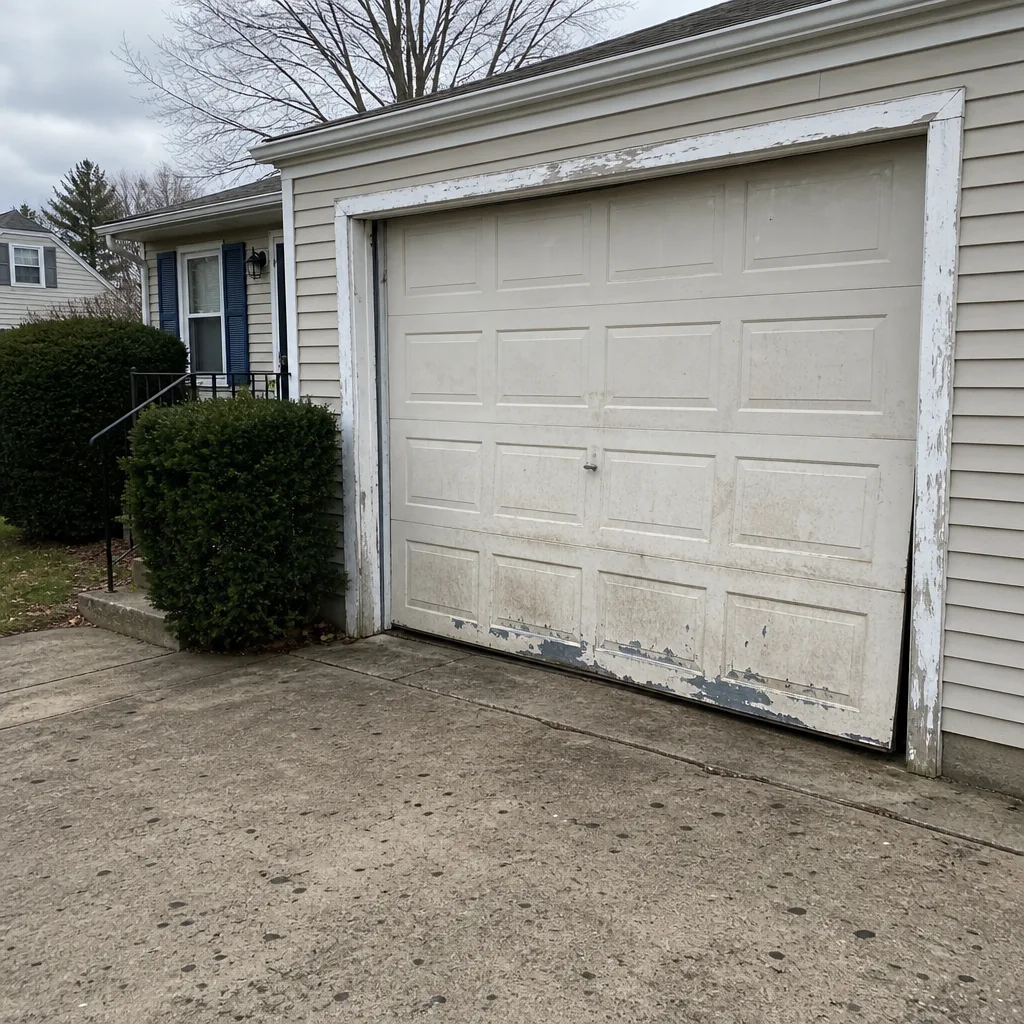 Before
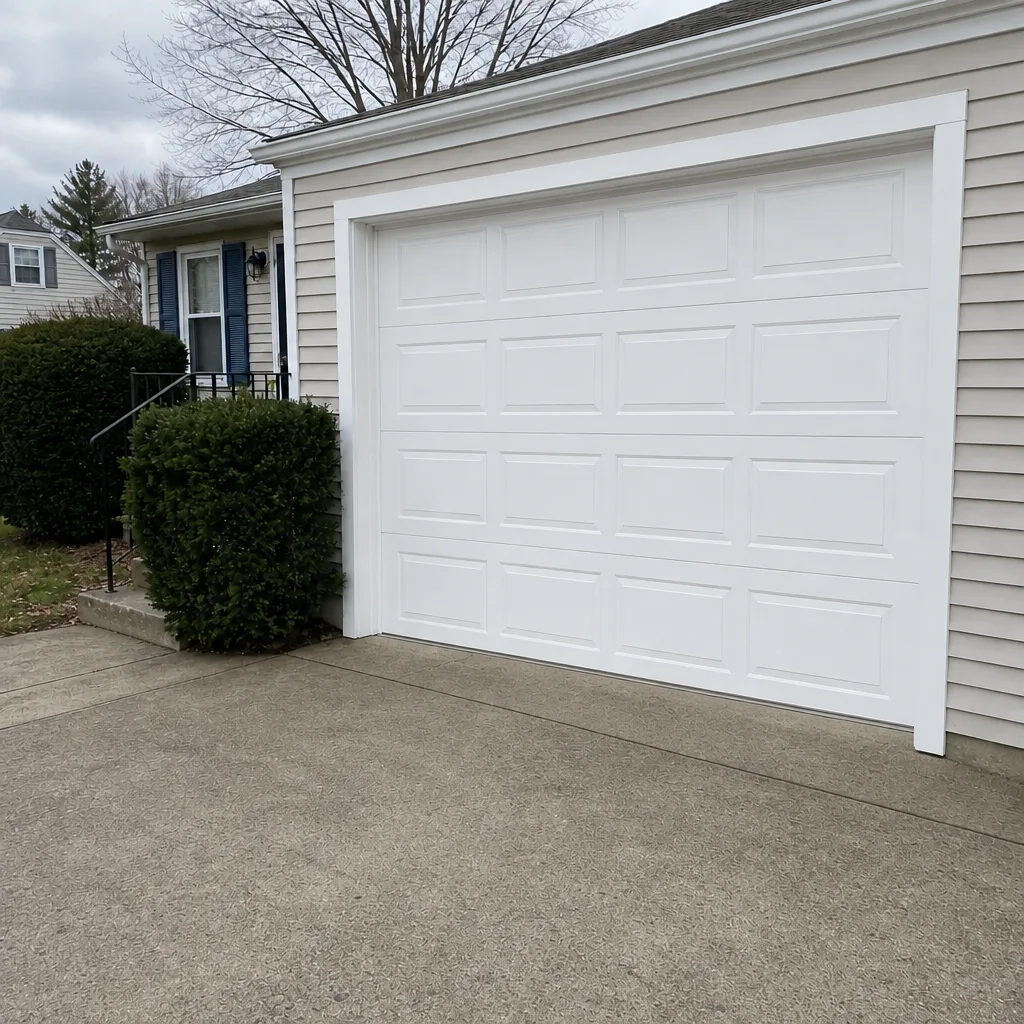 After
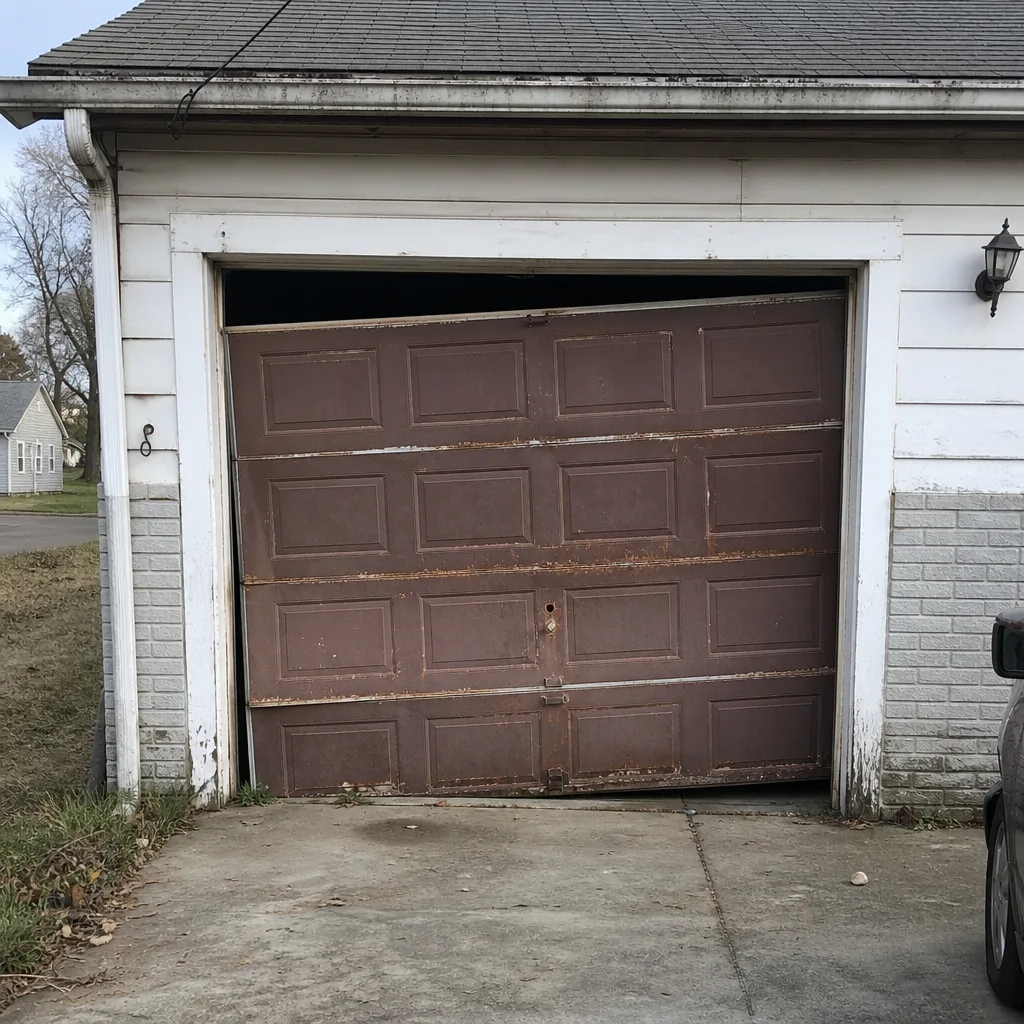 Before
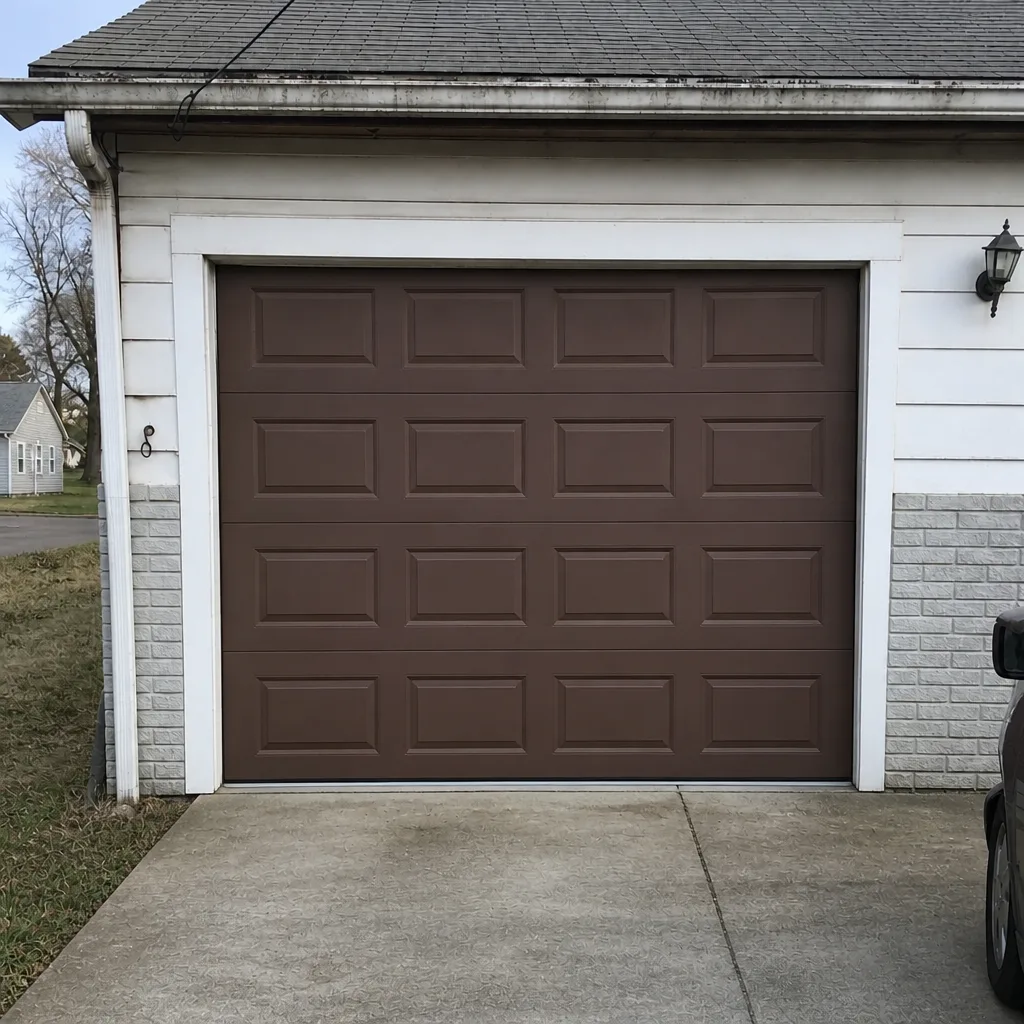 After
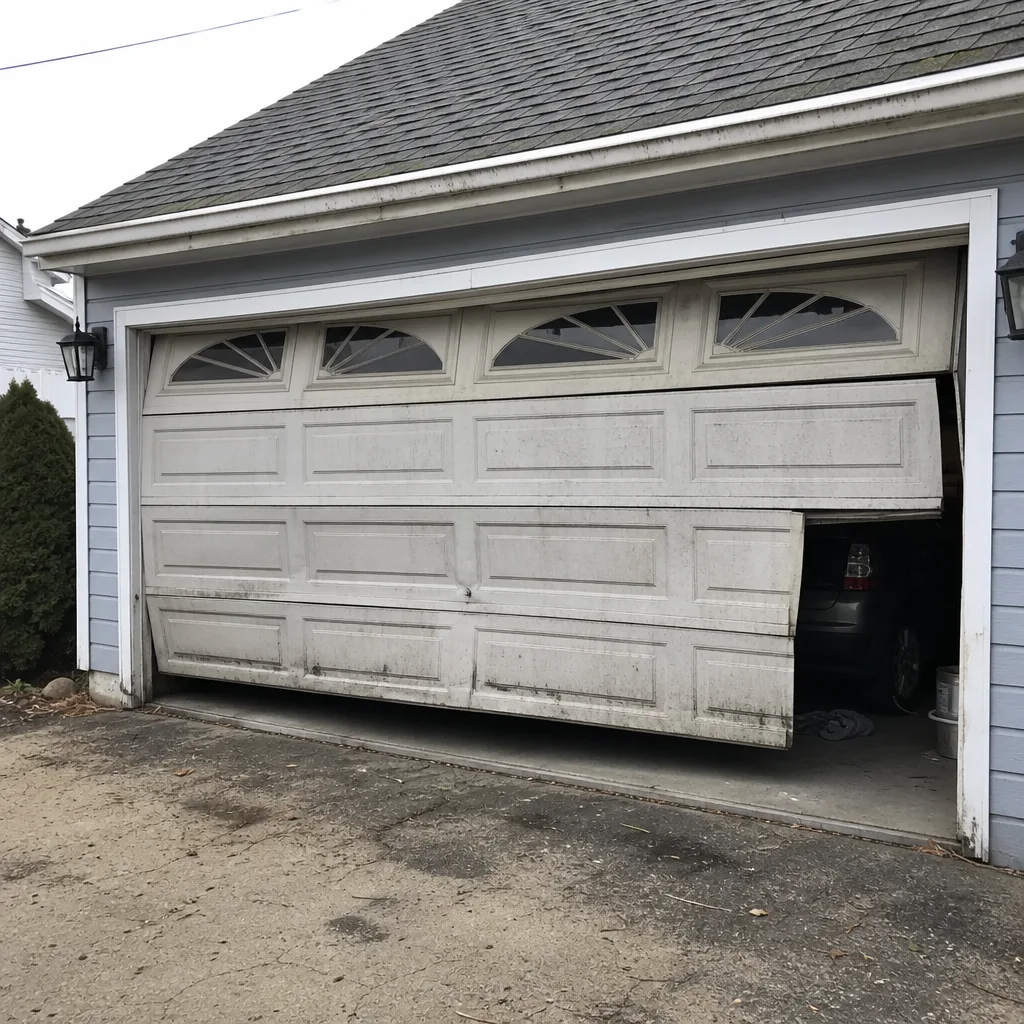 Before
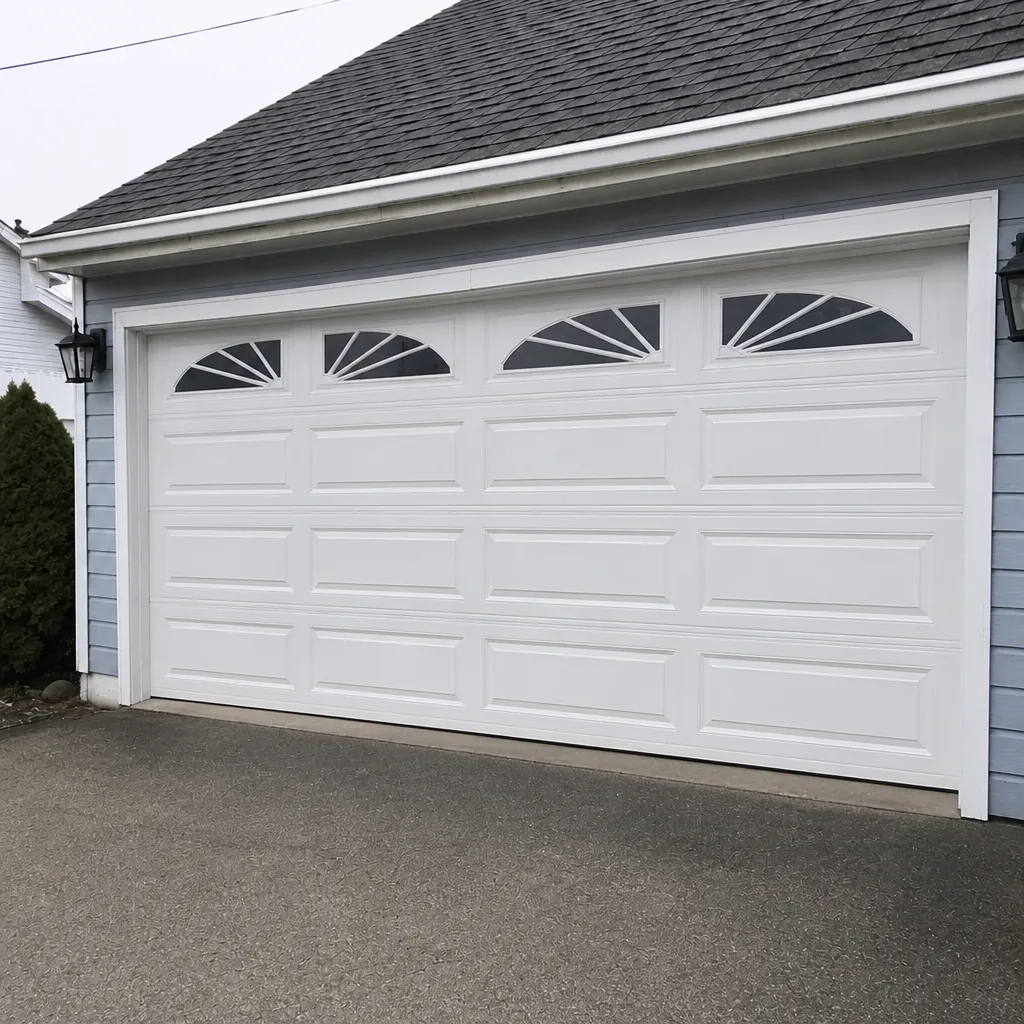 After
When to Call a Professional
Call a professional for any of the following. Don’t wait for the door to fail completely.
- The door won’t open, close, or reverses unexpectedly and re-checking the photo-eyes doesn’t fix it
- You hear a loud snap from the garage and the door won’t lift by hand
- The door is crooked, sagging, or has come off its track
- A cable is visibly frayed or slack
- The opener runs but the door doesn’t move, or the door moves but the opener doesn’t run
- The door is loud, jerky, or drifts down on its own when released
- You’re pricing a new door or opener and want a real number, not a guess
Chicopee Garage Door Repair Pros offers free estimates in Chicopee. Call (855) 658-4190. Emergency service is available for doors that won’t close at night or won’t open before work. Our technicians have up to 15 years of experience and are trained on LiftMaster, Chamberlain, Genie, Clopay, Amarr, Wayne Dalton, Craftsman, and Raynor systems. If you’re not sure whether your situation is urgent, call anyway. We’d rather talk you through it than have you wait until it gets worse.
Frequently Asked Questions
No. Torsion and extension springs store enough mechanical energy that a failure during replacement can cause serious injury. The correct number of winding turns, the right bars, and the correct spring spec for your door’s weight all have to be right at once, and a wrong spec fails early. Call (855) 658-4190 for spring repair in Chicopee; estimates are free.
Typical local estimates run $180-$340 per torsion spring, $120-$250 per extension spring, $140-$280 per cable side, and $120-$350 for most opener repairs. A matched pair of torsion springs costs about twice the single-spring range because both are usually replaced together. The written estimate sets the final price. Call (855) 658-4190 for an exact quote.
It depends on the task. Weatherstripping, opener programming, and lubrication are genuinely cheaper DIY because there’s no safety hazard and the parts are inexpensive. Springs and cables are not cheaper DIY once you count tool costs and the likelihood of a follow-up pro call. For those, the pro repair is usually the better total cost. Call (855) 658-4190 to compare.
For emergency calls, yes in many cases. A door that won’t close, a snapped spring, or a door off its track gets priority scheduling. Non-emergency repairs and new-door installs are booked by appointment because the work is measured, ordered, and installed. Call (855) 658-4190 and we’ll tell you honestly when we can be there.
The written estimate is the price. If the technician finds something that changes the scope once the door is open, we discuss it before any additional work and get your approval first. You won’t get a surprise invoice for work you didn’t agree to. Call (855) 658-4190 for a free estimate.
The local pro we connect you with is licensed and insured as their state requires. Ask for that before they start. Our technicians have up to 15 years of experience and work on LiftMaster, Chamberlain, Genie, Clopay, Amarr, Wayne Dalton, Craftsman, and Raynor systems. Call (855) 658-4190 to book a visit.
The Bottom Line
The DIY vs pro decision on a garage door comes down to one question: is the task under spring tension or not? If it isn’t, DIY is reasonable and often smart. Weatherstripping, opener programming, lubrication, and cleaning are all fine to handle yourself. If it is, the answer is no, regardless of how many tutorials you’ve watched. Springs, cables, and any work on a door that’s off its track belong to a trained technician. That’s not a marketing position. It’s how the physics works. Chicopee homeowners who understand that line end up spending less over time, because they save where it’s safe and skip the lessons that cost more than the repair.
If you’re at the line and not sure which side your job is on, call Chicopee Garage Door Repair Pros at (855) 658-4190. Estimates are free, and we’ll tell you honestly whether your door needs a repair you could have done yourself, or one you shouldn’t touch. That conversation costs nothing and often saves a weekend and a hospital visit.
Written by the team at Chicopee Garage Door Repair Pros.